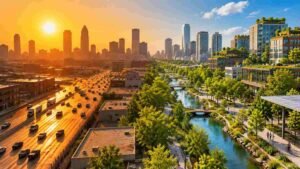
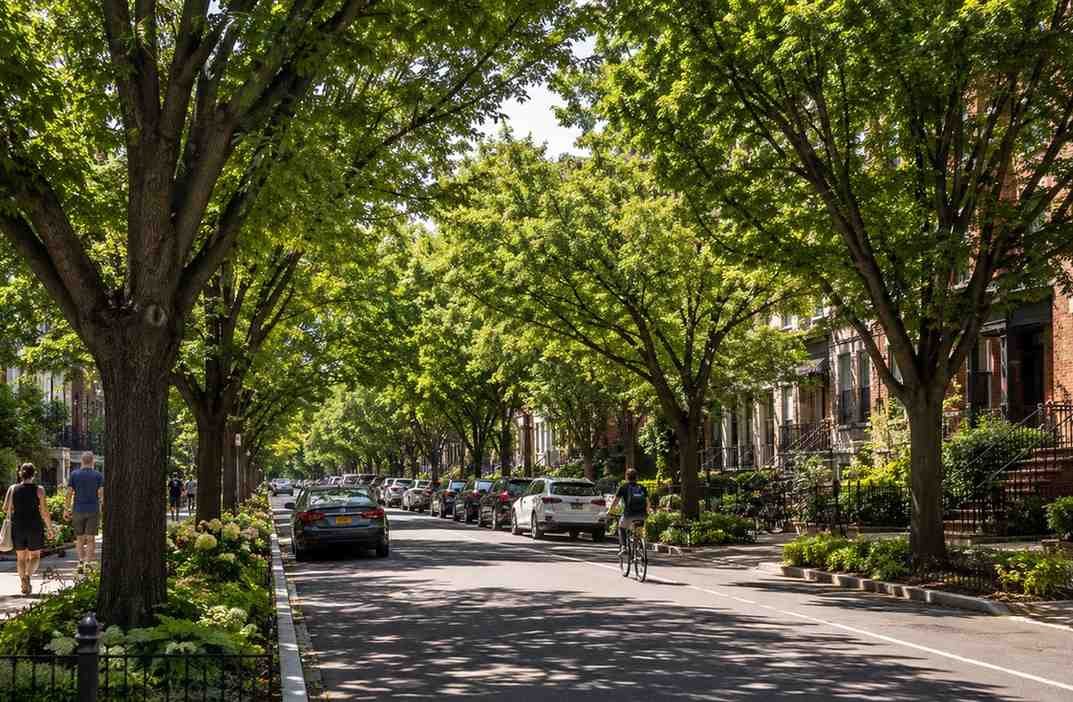
American cities are getting hotter, but the heat is not distributed evenly. Wide asphalt roads, concrete sidewalks, parking lots, and closely spaced buildings absorb solar energy during the day and release it long after sunset. Neighborhoods with limited tree canopy often experience the greatest exposure, especially along school routes, commercial corridors, bus stops, and heavily traveled sidewalks.
I see street tree planning for heat reduction as one of the most practical ways cities can respond. Trees cool public spaces through shade and evapotranspiration while also improving stormwater management, air quality, walkability, and neighborhood appearance.
Yet planting trees wherever an empty space appears will not produce the best results. Cities need a coordinated strategy that connects heat data, street design, tree biology, infrastructure, equity, and long-term maintenance.
How Do Street Trees Reduce the Urban Heat Island Effect?
Street trees primarily cool cities by blocking solar radiation and releasing moisture through their leaves.
A healthy canopy intercepts sunlight before it reaches asphalt, concrete, building walls, and parked vehicles. This matters because unshaded urban surfaces can become dramatically hotter than nearby shaded areas. The US Environmental Protection Agency reports that shaded surfaces may remain 20°F to 45°F cooler than comparable materials exposed to direct sunlight.
Trees also cool the surrounding environment through evapotranspiration. Their roots absorb water, and their leaves release that moisture as vapor. The process uses heat energy from the air and surrounding surfaces, creating a natural cooling effect. Mature trees with access to adequate soil moisture can transpire hundreds of liters of water during favorable conditions, although the amount varies by species, tree size, climate, and water availability.
How Much Cooling Can Street Trees Actually Provide?
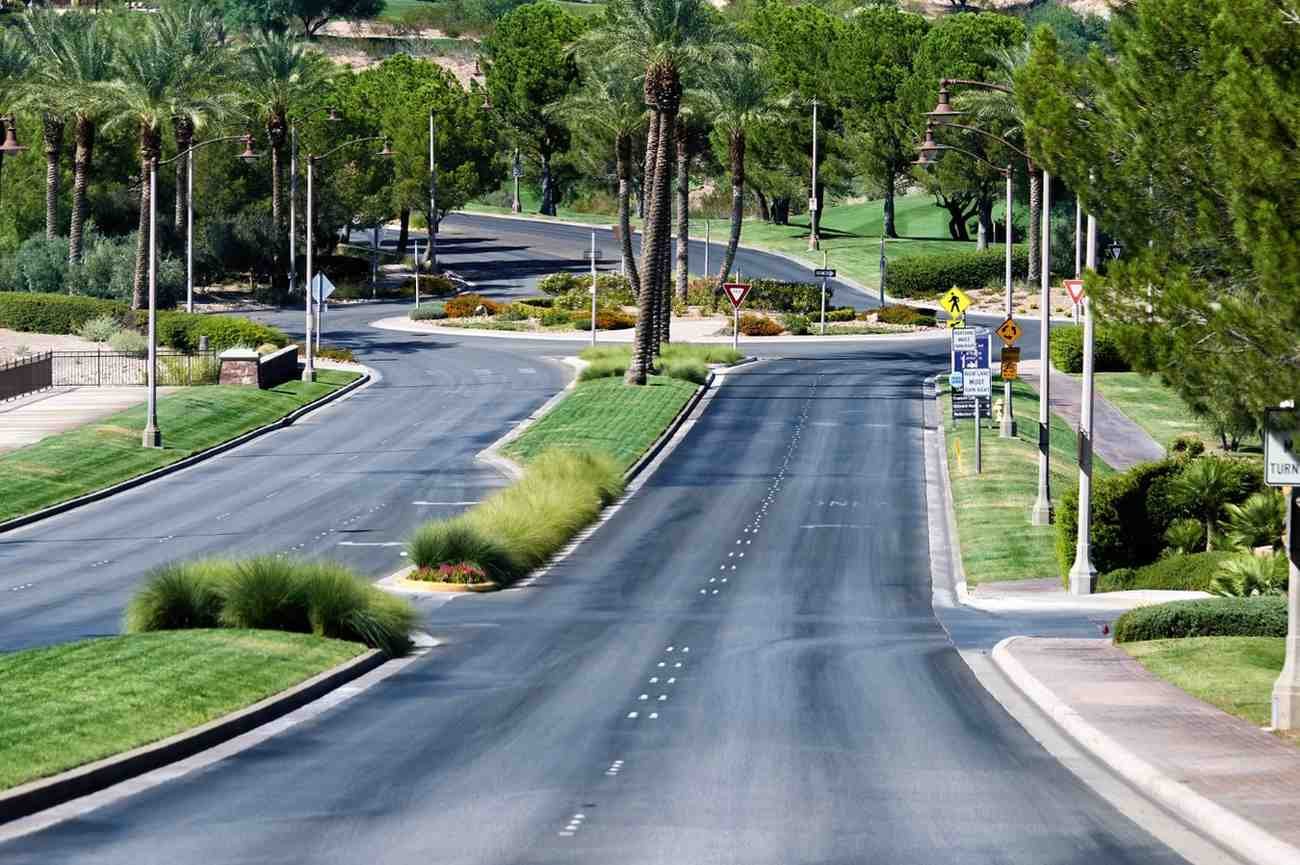
Cooling results depend on local climate, canopy density, tree health, urban form, and measurement methods. Research reviewed across more than 100 cities confirms that tree cooling performance changes according to tree characteristics, street geometry, and climate conditions.
Some individual studies have measured reductions in local air temperature of around 2.2°C under suitable conditions. Perceived heat can fall even more because shade blocks direct solar radiation from reaching the human body.
This difference is often measured through thermal-comfort indicators such as Physiological Equivalent Temperature, or PET. While a thermometer may show only a modest air-temperature change, a shaded pedestrian may feel substantially cooler than someone standing in direct sunlight.
Current WRI analysis suggests that urban trees can improve thermal comfort by approximately 2°C to 8°C, depending on the location and conditions.
Where Should Cities Plant Trees for Maximum Heat Relief?
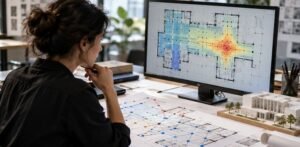
Cities should begin with heat mapping rather than planting targets. Satellite data, mobile temperature sensors, pavement maps, existing canopy inventories, and public-health information can reveal where residents face the greatest heat exposure.
However, the hottest location is not automatically the highest priority. I recommend combining temperature data with pedestrian traffic, transit use, age, income, housing conditions, access to air conditioning, and proximity to schools, medical facilities, grocery stores, public markets, and senior housing.
This approach helps cities build cooling corridors where people actually walk and wait. A tree shading a busy bus stop, crosswalk, vendor area, or school entrance may provide more immediate public value than one planted on a lightly used median.
Equitable canopy distribution also matters. Many low-income US neighborhoods have fewer mature trees and more heat-absorbing surfaces. Research continues to associate lower urban greenery with greater heat exposure in socially marginalized communities.
How Does Street Orientation Affect Tree Placement?
Street orientation changes when and where tree shadows fall.
On streets running southwest to northeast, a carefully positioned single row may provide useful shade during peak afternoon exposure. Northwest-to-southeast streets may require trees on both sides to create adequate pedestrian coverage. These principles should remain flexible because building height, road width, latitude, and surrounding development also affect solar access.
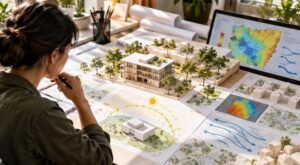
Planners should model shade during the hottest hours rather than relying only on annual canopy percentages. The goal should be to shade sidewalks, bike lanes, transit stops, storefront approaches, and exposed pavement when heat risk is highest.
Cities should also avoid creating overly dense canopies in narrow street canyons. Thick, overlapping foliage may reduce airflow and interfere with nighttime heat release. Wind-tunnel research indicates that dense or mature tree cover can weaken ventilation and trap heat under certain street-canyon conditions.
Narrower crowns, appropriate spacing, and preserved wind corridors can balance daytime shade with ventilation.
Which Tree Traits Deliver the Strongest Cooling?
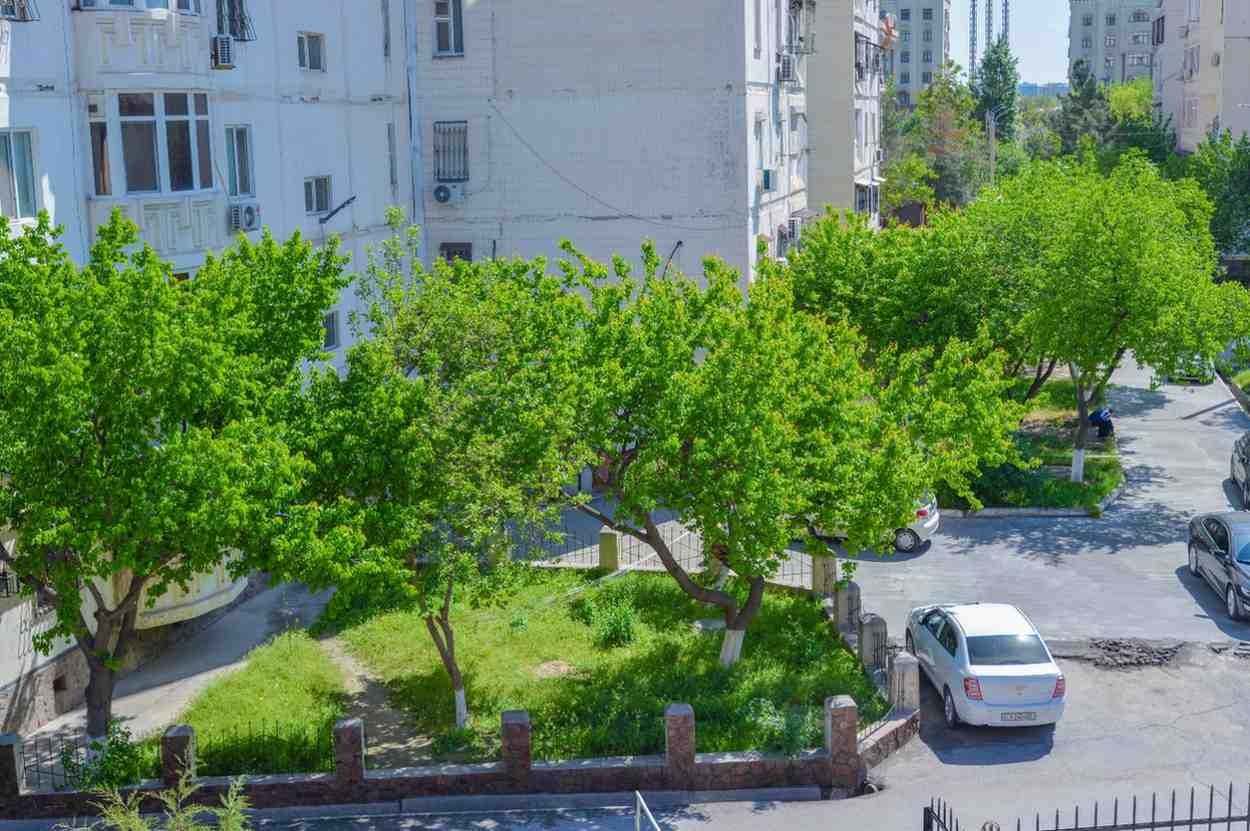
Large, healthy crowns generally provide the greatest shade footprint. Trees with a high Leaf Area Index, or LAI, have more leaf surface relative to the ground area beneath them, allowing them to intercept more sunlight.
High transpiration capacity can also strengthen cooling. Species with low stomatal resistance can release water vapor efficiently when adequate moisture is available. However, planners should not select trees based on transpiration alone. A species that cannot tolerate local heat, drought, compacted soil, road salt, pests, or irregular rainfall will not provide dependable long-term cooling.
US cities should prioritize native or climate-adapted species that maintain healthy foliage during summer heat waves. Species diversity is equally important. A resilient urban forest should include different tree families, mature sizes, growth rates, and age classes so that one pest or disease does not eliminate a large share of the canopy.
Layered vegetation can increase thermal relief. Combining tall shade trees with shrubs, grasses, and ground cover reduces exposed soil and pavement while supporting stormwater absorption. Designers must still protect visibility, personal safety, accessibility, and airflow.
Why Are Soil Volume and Water Access Essential?
A tree cannot develop a broad cooling canopy if its roots remain trapped in a small, compacted planting pit.
Cities should provide sufficient uncompacted soil, drainage, oxygen, and rooting space. Connected soil trenches, expanded planting beds, structural soils, and suspended pavement systems can support larger root networks where sidewalks limit space.
Stormwater features can also supply water. Tree trenches, curb extensions, bioswales, and rain gardens can capture runoff and direct it toward roots. These systems may reduce flooding, filter pollutants, and lower pressure on municipal drainage infrastructure.
Soil moisture directly affects evaporative cooling. Research has found that adequate moisture and irrigation can meaningfully improve the cooling performance of urban trees, particularly during hot weather.
How Can Cities Avoid Utility and Accessibility Problems?
Street trees compete for space with underground utilities, overhead lines, streetlights, signs, driveways, parking, drainage systems, and accessible pedestrian routes.
Before planting, cities should verify utility locations, mature root spread, canopy height, intersection sightlines, emergency access, and sidewalk clearance. Planting plans must comply with the Americans with Disabilities Act and preserve usable space for wheelchair users, pedestrians with visual impairments, caregivers, and people using mobility devices.
Matching mature tree size to available space can reduce sidewalk damage, aggressive pruning, and utility conflicts. Good planning costs less than repeatedly replacing failed trees or repairing damaged infrastructure.
How Should Cities Maintain and Measure Their Tree Programs?
Planting day should mark the beginning of the program, not the end.
Young street trees need several years of watering, mulching, formative pruning, inspection, pest monitoring, and protection from vehicles and landscaping equipment. Municipalities should fund establishment care before announcing ambitious planting totals.
Cities should measure survival rates, canopy growth, afternoon shade, surface temperature, pedestrian comfort, maintenance expenses, and the number of residents served. Tree counts alone can be misleading because small or dying trees provide little cooling.
Policy can reinforce these efforts. The Heat Action Platform describes street-tree mandates that require developers, businesses, or property owners to plant and maintain trees in public areas adjacent to new development or rehabilitation projects.
Frequently Asked Questions (FAQs)
1. How many street trees are needed to cool a neighborhood?
There is no universal number. Cities should measure mature canopy coverage, shade continuity, tree survival, street geometry, and pedestrian exposure rather than relying only on planting totals.
2. What are the best street trees for hot US cities?
The best species are heat-tolerant, drought-resilient, structurally strong, and appropriate for local soil, rainfall, utilities, and available rooting space.
3. Do street trees lower air temperature or only provide shade?
They do both. Canopies block solar radiation, while evapotranspiration can lower surrounding air temperatures when trees have adequate moisture.
4. Can too many trees make a street hotter?
Dense canopies may restrict ventilation in narrow street canyons. Planners should balance continuous shade with adequate spacing and airflow.
Building Cooler and More Livable US Streets
Effective street tree planning for heat reduction requires more than adding greenery to a streetscape. Cities must place shade where people need it, protect airflow, choose climate-resilient species, provide adequate soil and water, prevent infrastructure conflicts, and commit to long-term maintenance. Coordinating these efforts with rain garden planning for urban neighborhoods can also improve stormwater control while supporting healthier trees and cooler streets.
When planners treat trees as essential public infrastructure, the benefits extend beyond summer comfort. Healthy street canopies can reduce cooling demand in nearby buildings, absorb stormwater, improve air quality, slow pavement deterioration, support walking, and make neighborhoods more inviting.
I believe the strongest programs will measure success not by how many trees enter the ground, but by how many residents gain safe, reliable shade. With strategic street tree planning for heat reduction, US communities can turn exposed streets into cooler, healthier, and more resilient public spaces.