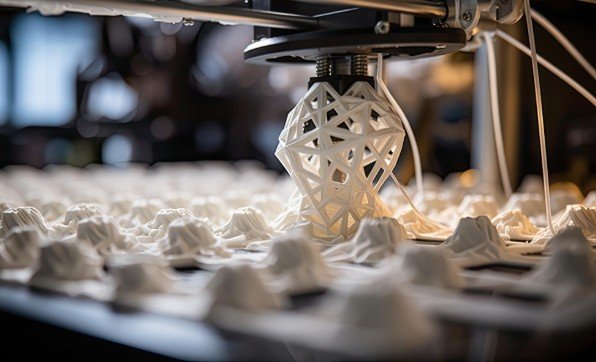
I have always been interested in technologies that make design more precise without creating unnecessary waste. That is why digital fabrication with recycled materials feels so important. It combines computational design, automated production and recovered resources to create components that are efficient, adaptable and visually distinctive. Instead of treating discarded resources as useless, designers can analyse, process and return them to productive use.
This approach is expanding across architecture, furniture, product design and construction. Large-scale printers can form recycled plastic into walls or pavilions, robotic systems can assemble irregular reclaimed elements, and CNC machines can cut salvaged boards with remarkable accuracy. More than a manufacturing technique, it offers a practical route towards circular design.
What Makes This Approach Different?
Traditional manufacturing usually begins with uniform, newly produced materials. Recycled feedstocks are less predictable because their colour, strength, dimensions and composition can vary between batches.
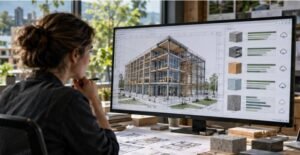
Digital scanning can record the exact shape of reclaimed timber or salvaged components. Parametric software can then adjust a design around the available pieces, while robotic arms can position elements that would be difficult to place manually. Additive manufacturing can also convert shredded or pelletised waste into completely new forms.
The central advantage is flexibility. A digital model can respond when the available material changes, reducing the need to force irregular resources into rigid production standards.
Recycled Materials Suitable for Digital Fabrication
Recycled Plastic
Post-consumer and industrial plastic can be sorted, cleaned, shredded and converted into pellets or filament. It is increasingly used for furniture, interior panels, temporary structures, decorative elements and public installations.
However, designers must consider contamination, chemical additives, repeated heating and whether the finished product can be recycled again. Mixing incompatible plastics can weaken performance and make future recovery more difficult.
Reclaimed Timber
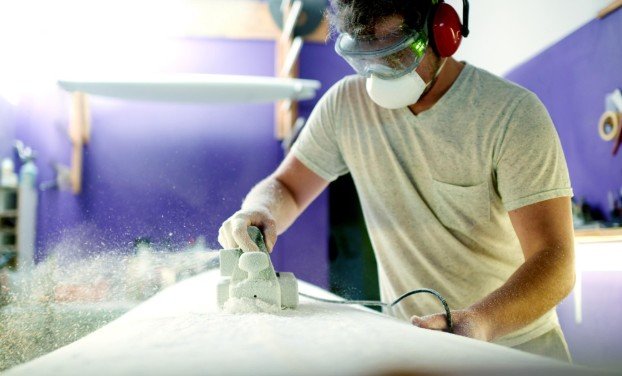
Timber from demolished buildings, workshops and manufacturing offcuts can be digitally mapped before cutting. CNC routers can optimise the placement of parts to avoid cracks, old fasteners and damaged areas.
Because reclaimed boards rarely have identical dimensions, scanning allows a design to adapt to each piece. This avoids removing excessive material simply to make every board uniform.
Mineral, Metal and Bio-Based Waste
Crushed concrete, brick fragments, stone dust and recycled glass can be used in printable mixtures or composite panels. Industrial mineral waste may also be transformed into lightweight components using specialised binders.
Recycled metal can be remelted, reshaped or incorporated into digitally assembled structures. Agricultural fibres, cork, cellulose, sawdust and other biological residues may become composite sheets or printable materials when combined with an appropriate binder.
The Step-by-Step Fabrication Workflow
Material Collection and Sorting
The process starts with identifying a reliable waste stream. Materials must be separated by type and checked for paint, adhesives, corrosion, moisture and hazardous contamination.
Consistent sorting improves the quality of the feedstock, supports large-scale additive manufacturing in construction, and reduces the risk of machine failure during production.
Testing and Preparation
Designers must understand the strength, density, melting behaviour, moisture content and dimensional variation of the recovered material.
Plastic may require washing, shredding and pelletising. Reclaimed timber may need cleaning, scanning and metal detection. Mineral waste may need crushing, grading and mixing before it can enter a fabrication system.
Computational Design
The digital model should be created around the material’s capabilities. Parametric tools can optimise thickness, geometry, support placement and material distribution.
This stage allows designers to reduce unnecessary mass while avoiding forms that exceed the strength or processing limits of the recovered feedstock.
Machine Preparation and Production
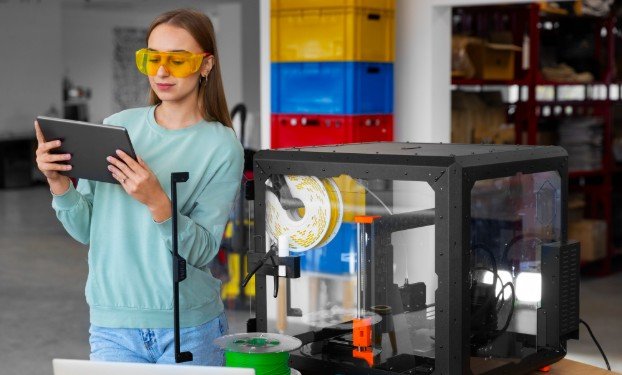
The completed model is converted into toolpaths or machine instructions. Depending on the project, production may involve a large-scale 3D printer, CNC router, laser cutter or robotic arm.
Sensors can monitor temperature, extrusion consistency, cutting force and machine position. Real-time monitoring is particularly important when recycled feedstocks vary between batches.
Finishing and Recovery Planning
Fabricated parts may require trimming, sanding, coating, assembly or mechanical testing. Designers should also consider how the components will be repaired, separated and recovered later.
Reversible fasteners and modular joints are often better than permanent adhesives because they allow individual parts to be removed without destroying the entire product.
Major Benefits for Design and Construction
One important benefit is material efficiency. CNC nesting software can arrange components to reduce cutting waste, while additive manufacturing places material only where it is required. Computational optimisation can also remove unnecessary mass without compromising performance.
The process supports customisation because every component can be produced from a slightly different digital file. This is valuable when working with irregular reclaimed pieces or project-specific requirements.
Local production may shorten supply chains when waste is collected, processed and fabricated near the project site. It can also create value from resources that might otherwise be burned, buried or transported elsewhere.
Recycled resources can also create distinctive visual qualities. Colour variations, fragments and surface textures can reveal the history of a material rather than hiding it.
Challenges That Cannot Be Ignored
Digital production does not automatically make a project sustainable. Energy-intensive processing, long transportation distances and non-recyclable binders can reduce the environmental benefits.
Recovered feedstocks may also have inconsistent strength and behaviour. Structural applications therefore require careful testing, documentation and compliance with relevant building requirements. Fire performance, weather resistance, toxicity and long-term durability must all be considered.
Machines may experience blockages, excessive wear or inaccurate output when feedstock quality changes. Reliable sorting and quality control are essential.
There is also a risk of downcycling. A product may successfully use waste but become impossible to recycle again because several materials have been permanently bonded together.
Designing for a Circular Lifecycle
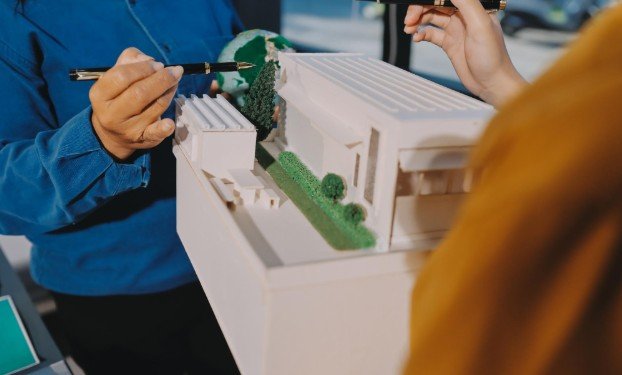
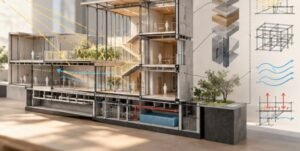
A circular project considers the full lifecycle of every component. Designers should document where the material came from, how it was processed and how it can eventually be recovered.
Material passports can store this information for future owners, contractors or recycling facilities. Components should also be modular, repairable and easy to separate.
Mechanical connections are often preferable to permanent adhesives. Standardised dimensions can help parts move between different projects, while take-back programmes can return damaged products to the fabrication process.
The strongest outcome is not simply using waste once. It is keeping valuable resources in circulation for as long as possible.
Future Opportunities
Machine vision will make it easier to identify, sort and classify irregular waste. Artificial intelligence may help predict material behaviour and adjust toolpaths during production.
Digital twins could track components through fabrication, installation, maintenance and eventual recovery. Mobile robotic systems may also process materials directly at demolition or construction sites.
These developments could reverse the conventional design process. Instead of selecting materials after creating a form, designers may begin with available waste streams and generate suitable forms around them.
Frequently Asked Questions
1. What is digital fabrication with recycled materials?
It is the use of computer-controlled equipment, including 3D printers, CNC machines and robotic systems, to transform recovered resources into new products or building components.
2. Which recycled material is easiest to fabricate?
Recycled thermoplastics are widely used because they can be shredded, melted and reformed. Their suitability still depends on polymer type, cleanliness and previous processing.
3. Can recovered materials be used structurally?
Some materials can be used structurally, but they require testing, engineering verification and compliance with applicable construction standards.
4. Does digital fabrication eliminate waste?
No. It can reduce cutting waste and improve material placement, but waste may still occur during sorting, failed production, finishing and eventual disposal.
Final Perspective
I see this approach as more than a temporary design trend. It changes the relationship between digital precision and material responsibility. When designers begin with available resources, test them carefully and plan for future recovery, discarded material can become a valuable design input.
I also believe the strongest projects will be those that remain honest about their limitations. A recycled resource is not automatically low impact, and an advanced machine does not guarantee circularity. Meaningful progress comes from combining responsible sourcing, efficient production, durable design and clear end-of-life planning. That combination can create objects and buildings that are both innovative and prepared for a resource-conscious future.