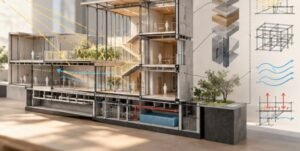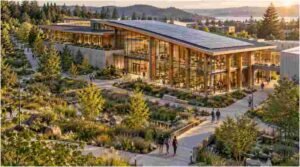
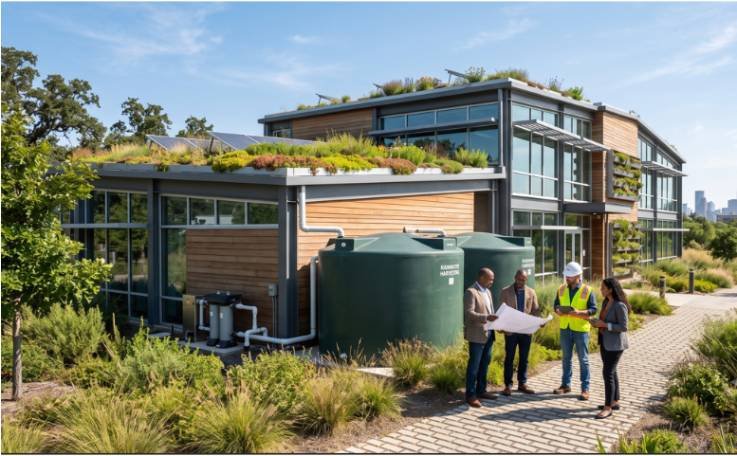
A building can feature efficient fixtures and still waste thousands of gallons through leaks, poor irrigation, or unmanaged cooling systems. The best water conservation strategies in sustainable building design treat water as a circulating resource, not a utility bill. I organize each decision in one order: reduce demand, detect losses, capture clean alternatives, and reuse wastewater where the numbers support it.
Why Water Conservation Strategies in Sustainable Building Design Start With a Water Budget
I map each water use by volume, timing, and required quality. Toilets, irrigation, cooling towers, laundry, kitchens, and cleaning do not need the same water standard. This prevents drinking-quality water from serving tasks that can safely use treated non-potable supplies.
The U.S. Green Building Council’s Water Efficiency framework follows a similar approach. It addresses indoor use, outdoor use, specialized uses, and metering rather than treating fixtures as isolated upgrades.
Follow a Water Hierarchy
My hierarchy has four steps: eliminate unnecessary demand, improve efficiency, substitute onsite sources, and optimize treatment. This sequence keeps pipes, tanks, pumps, and treatment units smaller.
It also connects water planning with life cycle assessment methods for sustainable building materials. A concrete cistern reduces potable demand but adds material, pumping, maintenance, and replacement impacts. Water conservation strategies in sustainable building design should compare operational savings with the life-cycle impact of added infrastructure.
A Worked Office Example
Consider a 100-person office operating 250 days yearly. Assume each person flushes three times daily. Replacing 3.5-gallon toilets with 1.28-gallon WaterSense models could save about 166,500 gallons annually.
This is an illustrative calculation, but the fixture rates align with Environmental Protection Agency guidance for older and efficient commercial toilets.
This example shows how water conservation strategies in sustainable building design can lower demand before a project invests in rainwater tanks or greywater treatment.
Indoor Potable Water Reduction and Leak Detection
Specify Efficient Fixtures That Still Perform
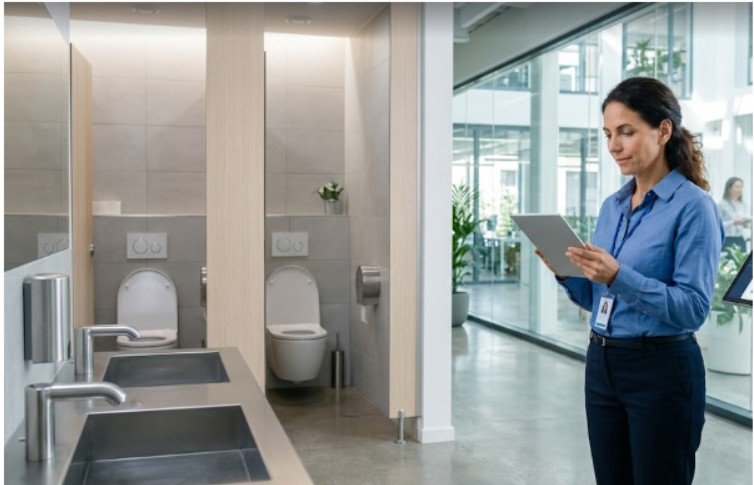
WaterSense products meet EPA efficiency and performance requirements through independent certification. Commercial WaterSense flushometer toilets use no more than 1.28 gallons per flush. That is 20% below the federal standard of 1.6 gallons.
Efficient public lavatory faucets should use 0.5 gallons per minute or less.
Low-flow showerheads, aerated faucets, dual-flush toilets, and efficient urinals must suit the building’s occupancy and water pressure. Designers should also review drainlines and maintenance access. Poorly selected fixtures often get overridden or replaced.
Submeter Major Water Loads
A utility meter shows total consumption but rarely identifies where waste occurs. I prefer separate meters for irrigation, cooling towers, kitchens, tenant zones, laundry areas, and major processes.
Unexpected overnight flow can reveal a leaking fixture. Sudden spikes may identify failed valves, broken irrigation lines, or malfunctioning equipment.
The EPA identifies planning, metering, and leak detection as core commercial water-management practices.
Smart submetering makes water conservation strategies in sustainable building design measurable after occupancy. Teams should set alerts, assign response owners, and document repair times. Data without an operating procedure becomes an expensive dashboard.
Improve Cooling-Tower Performance
Cooling towers lose water through evaporation, blowdown, drift, and leaks. Project teams can reduce demand by increasing cycles of concentration safely, controlling blowdown, filtering side streams, and monitoring water chemistry.
The Department of Energy reports that increasing cycles from three to six can reduce makeup water by 20% and blowdown by 50%. Safe limits depend on source-water quality, corrosion, scaling, and the treatment program.
Cooling-tower targets should be developed with mechanical engineers, treatment specialists, and facility operators. Design assumptions become meaningless when the operating team cannot maintain them.
Rainwater Harvesting and Alternative Water Sources
Capture Roof Runoff and HVAC Condensate
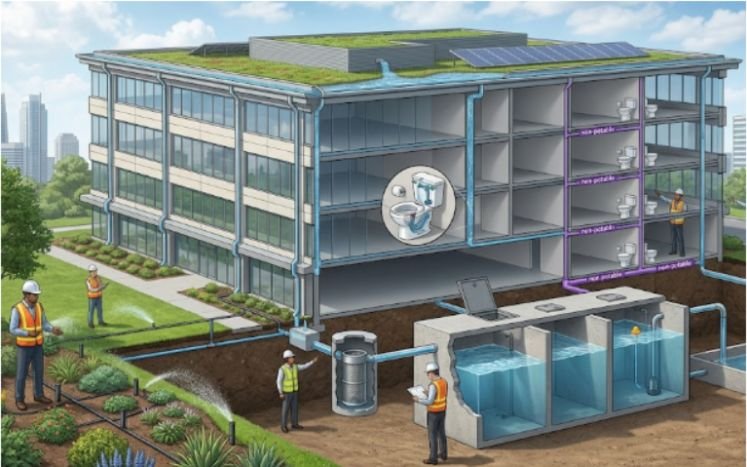
Rainwater can support irrigation, toilet flushing, cleaning, or cooling-tower makeup after suitable filtration and treatment.
HVAC condensate can be especially useful in humid regions. Cooling demand and condensate production often rise during the same warm, humid periods.
EPA guidance recommends implementing efficiency measures before investing in alternative water sources. It identifies collection surfaces, conveyance, debris screening, storage, and delivery equipment as core components of the rainwater system.
The EPA has also documented the use of air-handler condensate and harvested rainwater for cooling-tower makeup at the University of Texas at Austin.
Storage capacity should reflect:
- Available roof area
- Local rainfall patterns
- First-flush and filtration losses
- Monthly non-potable demand
- Expected dry periods
- Local plumbing requirements
Oversizing raises construction costs and embodied impacts. Undersizing causes regular overflow during storms and unreliable supply during dry weather.
Keep Stormwater on the Site
Permeable pavement, bioswales, rain gardens, and bioretention cells slow runoff and encourage infiltration. These systems can reduce pressure on drainage infrastructure while improving site quality.
They still need soil testing, pretreatment, safe overflow routes, and maintenance access. Porous surfaces can lose performance when dirt and sediment block their openings.
Strong water conservation strategies in sustainable building design make one feature perform several jobs. A planted basin can manage runoff, provide shade, support habitat, and improve outdoor comfort.
Greywater and Blackwater Recycling
Match Water Quality to Its Next Use
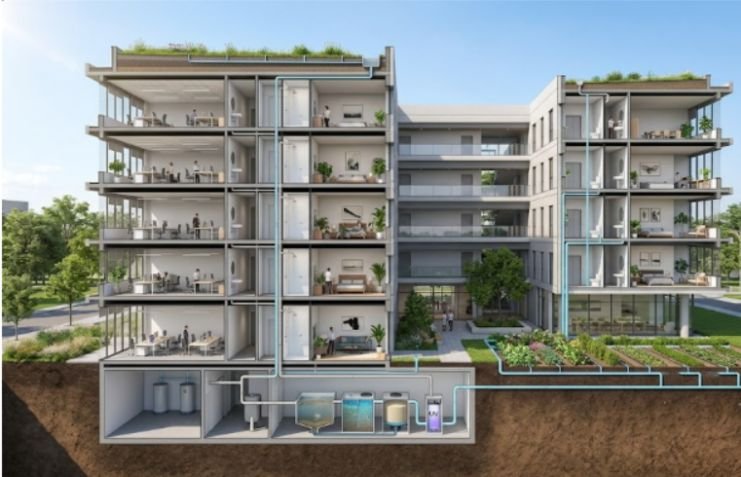
Greywater from showers, bathroom sinks, and laundry is less contaminated than toilet wastewater. After approved treatment, it may serve toilet flushing or subsurface irrigation.
Blackwater requires more advanced biological treatment, disinfection, monitoring, and trained oversight. Membrane bioreactors and compact sewage-treatment systems may support large buildings with dependable non-potable demand.
EPA guidance states that onsite reuse systems can capture greywater, wastewater, stormwater, and roof-collected rainwater. Approved applications may include toilet flushing, laundry, vehicle washing, dust control, and fire protection.
I avoid adding a reuse plant before confirming steady demand. A system that produces more reclaimed water than the property can use becomes a costly maintenance burden.
Verify Codes Before Final Design
Water-reuse requirements vary across US states and municipalities. Project teams must confirm:
- Permitted source-water types
- Minimum treatment and disinfection levels
- Cross-connection protection
- Purple-pipe or identification requirements
- Water-quality testing
- Signage and access controls
- Operator qualifications
EPA state summaries demonstrate that approved uses and treatment expectations differ across jurisdictions.
Early code review is one of the most practical water conservation strategies in sustainable building design. It prevents redesign, delayed permits, and equipment that cannot legally operate.
Water-Efficient Landscaping and Smart Irrigation
Design Around Climate and Soil
Xeriscaping does not mean replacing every planted space with gravel. It means selecting drought-tolerant, native, or regionally suitable plants and grouping them by water demand.
Healthy soil, deeper mulch, reduced turf areas, and strategic shade can further lower irrigation needs. EPA guidance notes that native and regionally appropriate planting can reduce water demand and maintenance costs.
Drip irrigation delivers water close to root zones and limits wind drift. It still requires filtration, pressure regulation, flushing points, and regular inspection.
Replace Timers With Responsive Controls
Traditional clock-based irrigation may operate during rain or when soil already contains enough moisture.
Weather-based controllers adjust irrigation using local weather and landscape conditions. Soil-moisture controllers interrupt scheduled watering when moisture reaches a set threshold.
The EPA estimates that replacing a standard controller with a WaterSense weather-based model can save an average home nearly 7,600 gallons annually. WaterSense soil-moisture controllers must consistently allow or prevent irrigation at their preset threshold.
For commercial sites, water conservation strategies in sustainable building design should connect irrigation controls with submeters, leak alerts, and seasonal landscape reviews.
Design for Operations, Not Just Certification
Filters clog. Sensors drift. Valves get bypassed. Irrigation schedules change. A water-saving system will not maintain itself after the commissioning team leaves.
I include staff training, alarm procedures, seasonal settings, maintenance responsibilities, spare parts, and water-quality testing in the design scope.
DOE guidance treats efficiency, alternative sourcing, and reuse as connected elements of low- or zero-water buildings. A net-zero water goal should rely on a verified annual water balance, not a marketing label.
Reliable water conservation strategies in sustainable building design must remain understandable and maintainable throughout the building’s operating life.
Stop Paying to Waste Water
The smartest water conservation strategies in sustainable building design are not always the most complex. Start with a water budget. Remove avoidable demand. Meter major uses. Add rainwater, condensate, greywater, or advanced treatment only where supply, demand, regulations, and maintenance capacity align.
My next step is a one-page annual water balance. Compare predicted potable demand with the volume available from onsite sources. That worksheet quickly separates valuable systems from costly brochure features.
Frequently Asked Questions
1. What are the best water-saving systems for green buildings?
Efficient fixtures, submeters, leak detection, smart irrigation, and properly sized reuse systems usually deliver the strongest combined results.
2. How does rainwater harvesting reduce potable water use?
It replaces drinking water in approved non-potable applications such as irrigation, toilet flushing, cleaning, and cooling-tower makeup.
3. Can commercial buildings reuse greywater?
Yes, where local codes allow it and approved treatment, cross-connection protection, monitoring, and maintenance are provided.
4. How do water conservation strategies in sustainable building design support net-zero water goals?
They reduce demand first, then use onsite capture and recycling to lower or balance annual dependence on municipal potable water.