A material can look sustainable and still carry a heavy carbon footprint. I have learned to check what happened before it reached the jobsite: extraction, manufacturing, transportation, installation, and replacement.
The best sustainable building materials for low carbon construction reduce these emissions while meeting structural, fire, moisture, durability, and code requirements. The goal is not to select the trendiest product. It is to choose the lowest-impact material that can perform reliably in its intended location.
What Makes a Building Material Low Carbon?
Low-carbon materials produce fewer greenhouse gas emissions across their life cycle than conventional alternatives. Their advantages may come from renewable feedstocks, recycled content, cleaner manufacturing, carbon storage, local sourcing, or long service life.
I assess each option using three questions:
- Does an Environmental Product Declaration support its carbon claims?
- Can it perform safely in the proposed application?
- Is it available close enough to avoid excessive transportation?
Environmental Product Declarations, or EPDs, provide standardized environmental data. The US Environmental Protection Agency supports wider EPD development because transparent reporting helps buyers compare embodied emissions.
Quick Comparison of Low-Carbon Materials
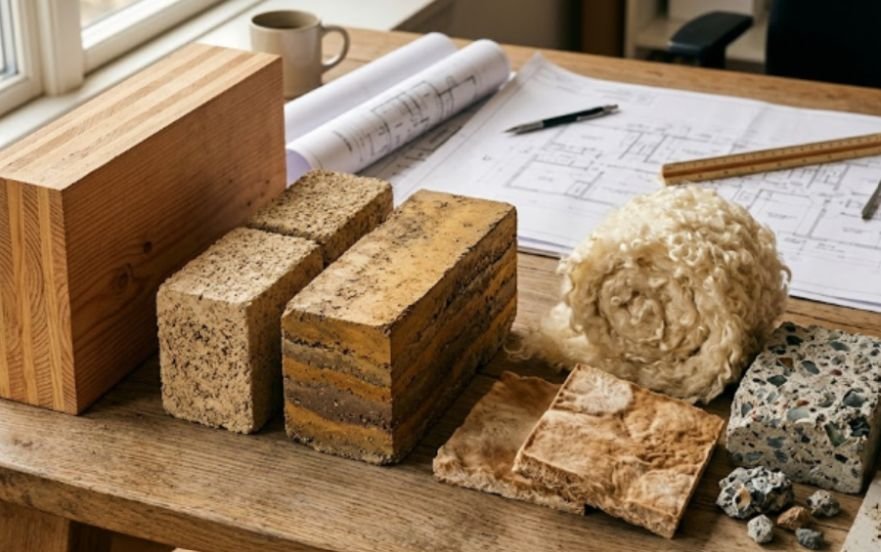
| Material | Carbon advantage | Main benefit | Suitable applications |
| Mass timber | Stores biogenic carbon | Strong yet lightweight | Frames, floors and roofs |
| Carbon-cured concrete | Mineralizes captured CO₂ | Familiar structural performance | Slabs and concrete elements |
| Hempcrete | Stores carbon in plant fibers | Insulation and moisture control | Non-load-bearing walls |
| Rammed earth | Uses minimally processed soil | Thermal mass and durability | Walls in suitable climates |
| Mycelium | Grown from fungi and waste fibers | Lightweight insulation | Interior panels and insulation |
| Sheep’s wool | Renewable and minimally processed | Thermal and acoustic control | Wall and roof cavities |
Carbon results vary by manufacturer, energy source, transport distance, design life, and end-of-life assumptions.
Best Low-Carbon Structural Materials
Mass Timber
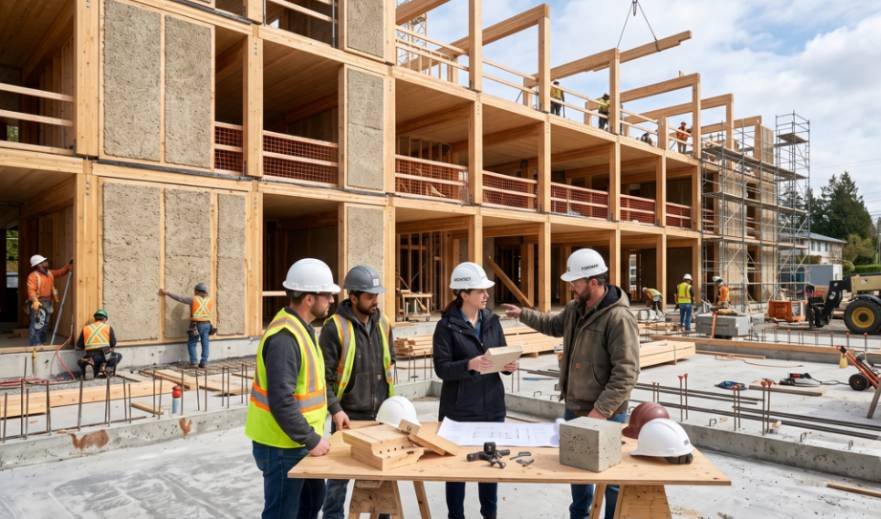
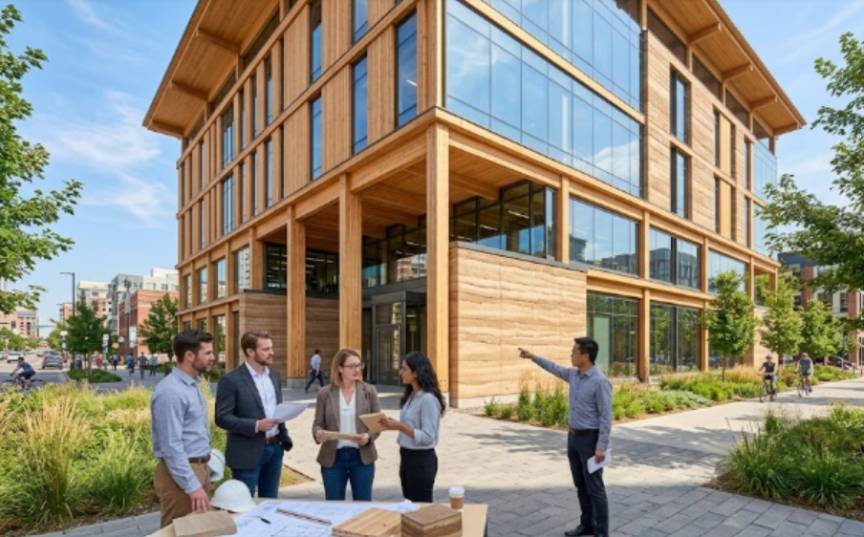
Mass timber includes cross-laminated timber, glued-laminated timber, and related engineered products. These systems can replace portions of steel and reinforced concrete while creating lighter structural assemblies.
Wood stores carbon absorbed during tree growth. It may also avoid emissions associated with more carbon-intensive materials. USDA research comparing mass timber, concrete, and steel buildings supports its potential, although forest management, manufacturing, fire design, and end-of-life scenarios remain important.
I would never treat timber as automatically carbon negative. Project teams should verify forest certification, EPD boundaries, connection design, fire resistance, and moisture protection.
Low-Carbon and Carbon-Cured Concrete
Concrete remains necessary for many foundations, slabs, and infrastructure projects. The practical response is often to reduce its footprint rather than eliminate it.
Lower-carbon mixes may use optimized cement quantities, supplementary cementitious materials, recycled aggregates, or alternative binders. Carbon-curing systems introduce captured carbon dioxide during production. The carbon mineralizes within the concrete instead of remaining as free gas.
Performance specifications can create more flexibility than prescriptive cement-content requirements. Teams should still test strength gain, curing time, availability, durability, and code compliance.
Rammed Earth
Rammed earth compresses carefully graded soil into dense walls. Local soil can reduce processing and transportation, while the finished wall provides useful thermal mass.
Its performance depends on soil composition, rainfall, freeze-thaw exposure, detailing, and stabilization. Cement-heavy stabilization can erase part of its carbon advantage. I therefore see rammed earth as a climate-specific solution, not a universal substitute.
Bio-Based Insulation and Wall Materials
Hempcrete
Hempcrete combines hemp hurd with a lime-based binder. It works as insulating wall infill rather than a primary structural frame.
Hemp grows quickly and absorbs carbon during cultivation. Lime carbonation may store additional carbon after installation. Peer-reviewed life-cycle research has found lower embodied emissions for some hemp-based products, but results change with farming practices, binder content, energy supply, and system boundaries.
Its vapor permeability can support moisture regulation. However, designers must account for wall thickness, drying time, weather exposure, fire assemblies, and limited regional supply.
Mycelium and Sheep’s Wool
Mycelium products grow fungal root networks around agricultural fibers. Manufacturers can form the material into lightweight insulation or interior panels. These products remain emerging, so fire ratings, moisture resistance, certifications, and commercial availability require close review.
Sheep’s wool offers renewable thermal and acoustic insulation. It can absorb and release moisture without immediately losing performance. Treatment methods, pest resistance, sourcing, and installed cost should be checked before specification.
How to Select the Right Material
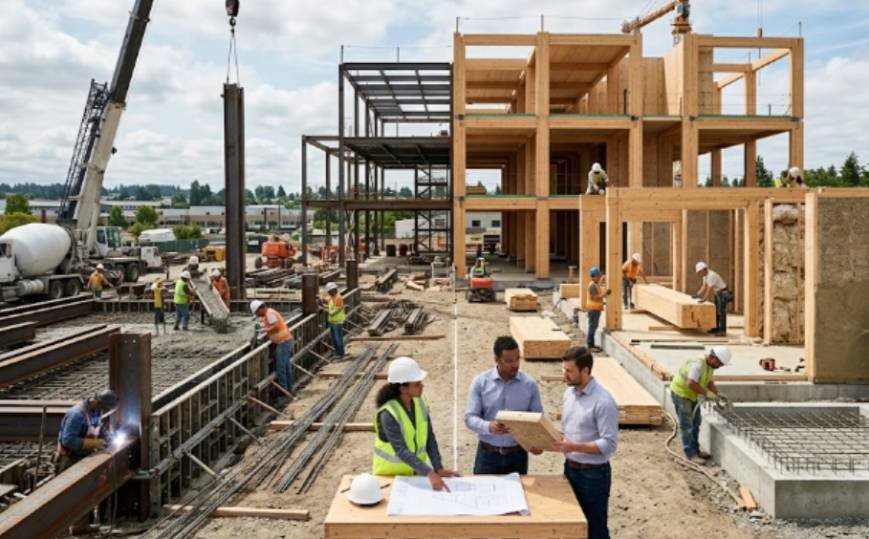
The smartest approach to sustainable building materials for low carbon construction begins with the whole building, not a list of products.
Reviewing civic center architecture case studies for public space design can show how low-carbon materials are balanced with durability, accessibility, maintenance demands, heavy public use, and civic identity.
First, reduce unnecessary floor area and structural mass. Next, reuse existing foundations or frames where possible. Then compare materials using product-specific EPDs rather than generic claims.
A useful worked example is a concrete floor specification. Instead of merely requesting “green concrete,” set a maximum global warming potential, permit qualified cement replacements, and require verified EPDs. This gives suppliers a measurable target without prescribing one proprietary solution.
Material decisions should also support how to reduce embodied carbon in building design, including efficient structural grids, adaptable spaces, durable assemblies, and design for disassembly.
Build Smarter, Not Just Greener
A bamboo label or recycled-content claim does not guarantee a low-carbon building. Performance, quantity, transport, maintenance, and eventual disposal matter just as much.
My strongest recommendation is simple: use less material first, then demand verified carbon data for what remains. That habit turns sustainable building materials for low carbon construction from a marketing promise into a measurable design strategy.
Frequently Asked Questions
1. What are the best low-carbon materials for houses?
Responsibly sourced timber, low-carbon concrete, cellulose, hempcrete, and reclaimed materials are strong options when suited to local codes and climate.
2. Is hempcrete suitable for structural walls?
Hempcrete normally serves as non-load-bearing insulation around a separate timber, steel, or concrete frame.
3. How can contractors compare embodied carbon?
Compare product-specific EPDs with equivalent functional units, life-cycle stages, performance requirements, and service lives.
4. Are sustainable materials always more expensive?
Not always; lighter structures, faster installation, lower material quantities, and reduced energy demand may offset higher unit prices.