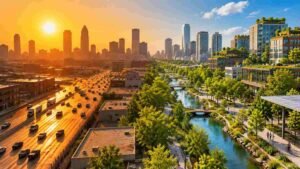
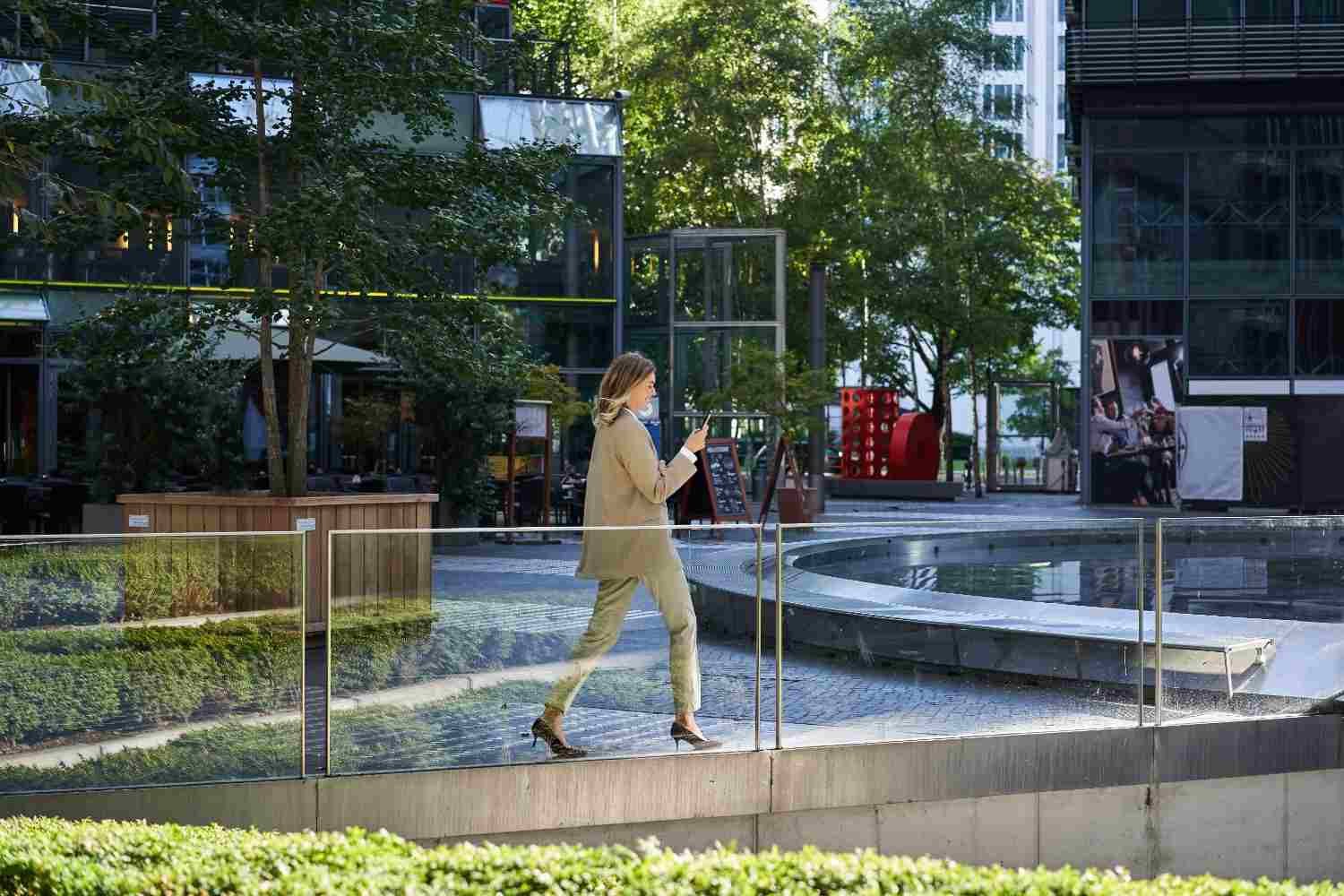
A downtown can lose energy long before its buildings become obsolete. When streets prioritize fast-moving traffic over people, local businesses feel disconnected, sidewalks become uncomfortable, and public spaces stop functioning as destinations. That is why I find downtown streetscape improvement case studies so valuable: they reveal how cities can redesign ordinary streets into safer, greener, more walkable places that support both community life and economic activity.
Across the United States, successful projects have used road diets, Complete Streets principles, wider sidewalks, green infrastructure, cultural placemaking, transit connections, and pedestrian-first design to revive struggling urban cores. The most effective transformations do more than improve appearance. They change how people move, how long they stay downtown, and how confidently businesses invest in the surrounding district.
How Did Broadway in New York Use a Road Diet to Create More Pedestrian Space?
The Challenge
Before major changes began in the late 2000s, portions of Broadway through Midtown Manhattan carried intense vehicle traffic while sidewalks struggled to accommodate enormous pedestrian volumes. The street functioned primarily as a transportation corridor even though thousands of people used the area on foot every hour. That mismatch between inherited infrastructure and current public needs is similar to what appears in adaptive reuse case studies in small cities, where older spaces must be reworked to serve contemporary patterns of use.
The Strategy
New York City reduced vehicle space along key sections of Broadway and converted reclaimed roadway into pedestrian plazas and esplanade areas. Tables, chairs, planters, bicycle facilities, and flexible public space replaced portions of the previous traffic lanes.
This road diet demonstrated an important principle in modern downtown revitalization: streets do not need to maximize vehicle capacity to function effectively.
The Result
The redesign improved pedestrian comfort, reduced conflicts between vehicles and people, and created places where visitors could sit rather than simply pass through. It also strengthened retail activity by increasing the amount of usable public space adjacent to storefronts.
For me, Broadway remains one of the clearest examples of how traffic calming and placemaking can work together.
How Can Green Infrastructure Improve a Downtown Streetscape?
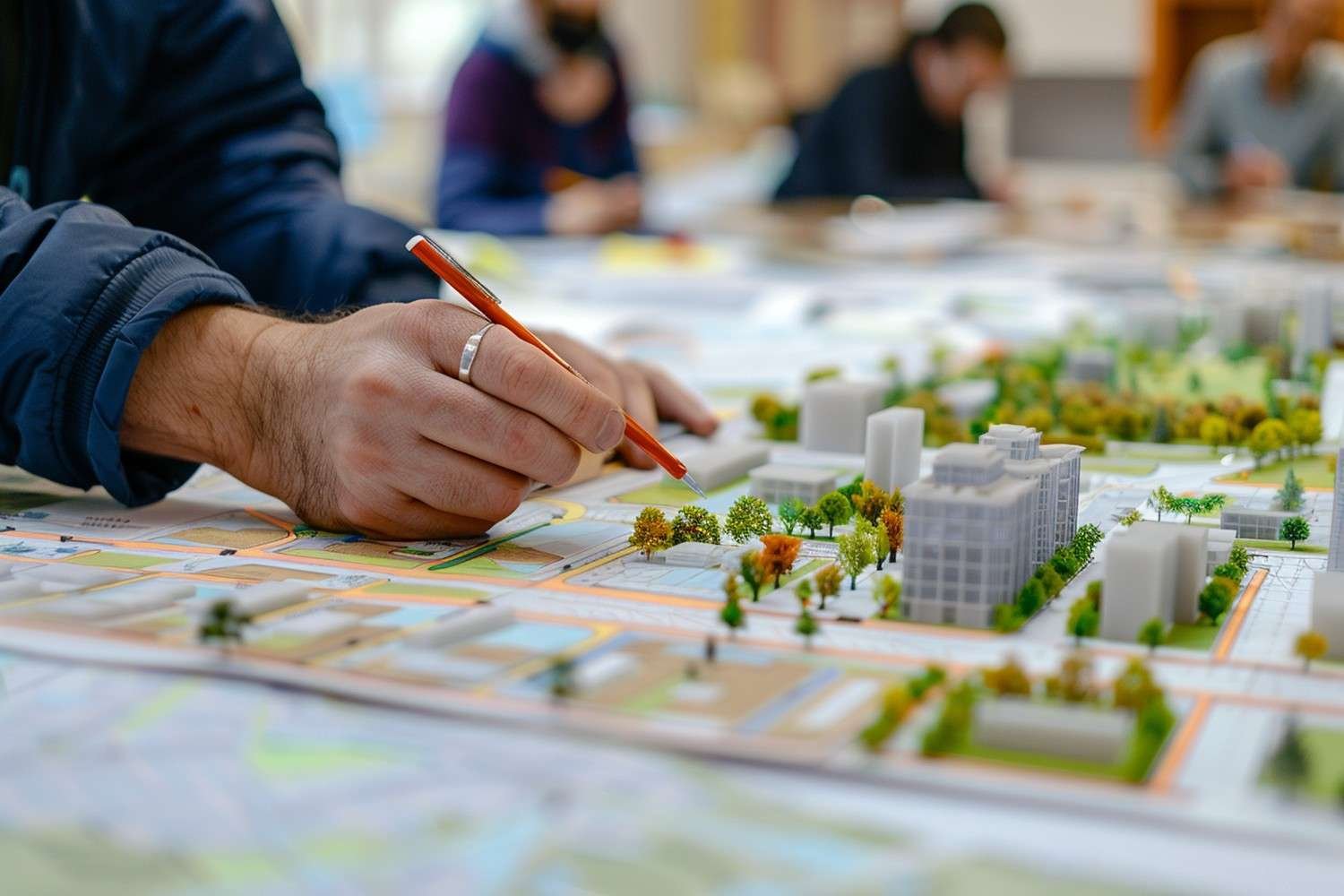
Urban forestry is often treated as decoration, but healthy street trees are actually infrastructure.
Eveline Street in Selkirk, Manitoba, offers a useful comparison for US downtowns even though the project is outside the United States. Its seven-block reconstruction integrated pedestrian, bicycle, and vehicle improvements with advanced soil systems beneath paved surfaces. The project provided newly planted canopy trees with uncompacted soil volumes that support healthier root growth.
The larger lesson is highly relevant to American cities. Downtown street trees need enough soil, water, and drainage capacity to survive.
When cities combine urban forestry with stormwater management, sidewalk design, and multimodal transportation, green infrastructure becomes part of the street’s long-term performance rather than an ornamental afterthought.
How Did Burien, Washington Build a Walkable Civic Downtown?
Burien approached downtown revitalization differently. Instead of focusing only on one street, the city developed a larger civic and mixed-use framework around Burien Town Square.
A new public square became the center of a network connecting City Hall, a regional library, transit facilities, housing, retail, and pedestrian-oriented streets.
This is important because streetscape planning works best when it connects destinations.
Burien demonstrates how transit-oriented development, civic investment, mixed-use density, and public-space design can reinforce one another. Rather than treating the sidewalk as leftover space beside the road, the city used the public realm to help organize a walkable downtown district.
How Did Portland Chinatown Use Cultural Placemaking?
Designing the Street Around Neighborhood Identity
Portland’s Old Town Chinatown shows another side of streetscape design: cultural identity.
The neighborhood needed pedestrian improvements and stronger public investment, but a generic redesign could have erased some of its character. Instead, streetscape elements reflected Asian and Asian-American history and culture.
Design interventions included distinctive lighting, granite features, historic plaques, street trees, widened pedestrian areas, and changes to roadway allocation.
This type of cultural placemaking matters because successful downtown streets should feel specific to their location.
A streetscape should not look as though the same design could have been installed in any city.
Why Is Greer, South Carolina a Strong Historic Downtown Revitalization Example?
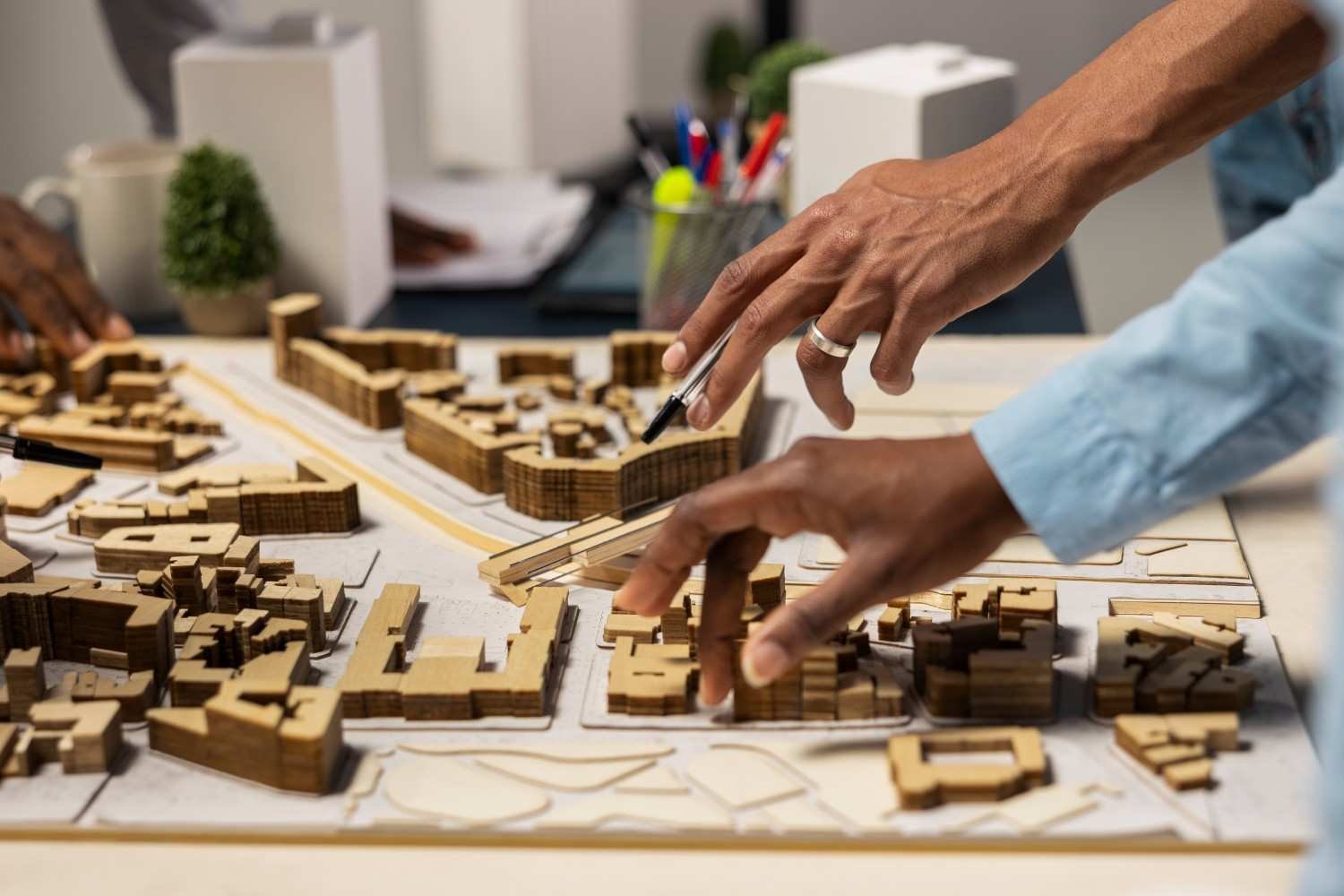
Greer had a problem familiar to many smaller American cities. Its historic downtown had become too oriented toward vehicles, weakening walkability and reducing the appeal of the commercial core.
The city responded with a comprehensive downtown streetscape master plan rather than isolated beautification projects.
Urban planners studied pedestrian movement, parking, street geometry, public spaces, and connectivity. Improvements included pedestrian bump-outs, redesigned street configurations, shared-space concepts, and stronger links between businesses and public areas.
Among the downtown streetscape improvement case studies I reviewed, Greer stands out because the city treated walkability as an economic development strategy.
The lesson is important for small and midsize US communities: improving the downtown street can change how long people stay, how often they visit businesses, and how the district functions as a destination.
What Can Complete Streets Projects Teach Downtown Planners?
Projects in cities such as Concord, New Hampshire, Glenwood, Minnesota, and Geneva, New York, reinforce many of the same lessons.
Concord reduced the dominance of vehicle lanes and created more space for wider sidewalks, landscaping, seating, and pedestrian activity.
Glenwood incorporated raised bicycle facilities, lighting, landscaping, and street reconfiguration to improve safety.
Geneva used streetscape improvements to strengthen connections between downtown areas and nearby destinations while integrating public art, landscaping, bicycle infrastructure, and gathering spaces.
These projects show that Complete Streets should not be reduced to simply adding a bike lane.
A successful multimodal street considers pedestrians, cyclists, transit riders, drivers, deliveries, parking, accessibility, and nearby businesses as parts of one system.
What Features Appear in Successful Streetscape Projects?
Across these examples, several strategies appear repeatedly.
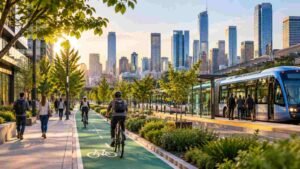
Successful projects reduce unnecessary vehicle dominance, shorten pedestrian crossings, improve ADA accessibility, strengthen lighting, support street trees, add gathering areas, and make walking more comfortable.
However, I would not copy design features without understanding local conditions.
A curb extension that improves one intersection might interfere with deliveries somewhere else. A pedestrian plaza can energize one district but struggle if surrounding storefronts remain vacant.
Context matters as much as design.
How Do Streetscape Improvements Support Downtown Businesses?
Streetscape investment can support local businesses by making downtowns safer, more attractive, and easier to explore on foot.
Better sidewalks increase storefront visibility. Shade trees and seating encourage people to remain downtown longer. Flexible plazas can support events, dining, markets, and cultural programming.
But streetscape construction can also disrupt businesses, and physical improvements alone cannot guarantee economic success.
Cities need to plan for loading access, parking, construction phasing, maintenance, commercial occupancy, and ongoing programming.
A beautiful street without active businesses can still feel empty.
What Should Cities Avoid When Redesigning Downtown Streets?
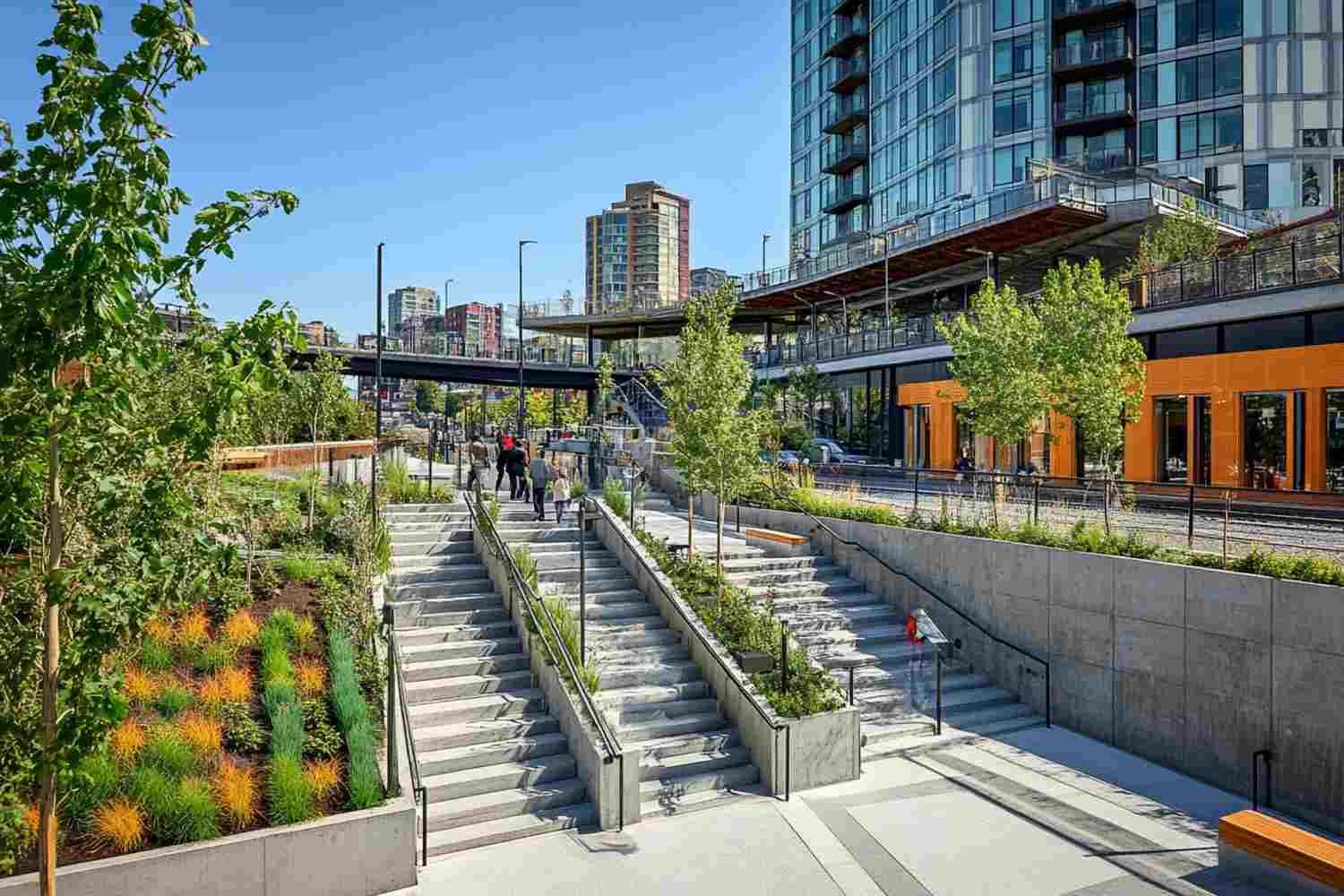
The biggest mistake is treating a streetscape project as cosmetic beautification.
Decorative paving and lighting may improve appearance, but they will not fix unsafe crossings, poor drainage, inaccessible sidewalks, weak transit connections, or excessive vehicle speeds.
Cities should also think beyond opening day. Trees need space to mature. Stormwater systems need maintenance. Furniture wears out. Delivery vehicles still require access.
The most successful streetscape is one that still works well years after construction.
Frequently Asked Questions (FAQs)
1. What are downtown streetscape improvement case studies used for?
Downtown streetscape improvement case studies help planners, architects, students, municipalities, and downtown organizations understand how real projects improved walkability, transportation, public space, safety, and economic activity.
2. What is the most important goal of a downtown streetscape project?
The goal should be to create a safer, more comfortable, accessible, and economically active downtown rather than simply making the street look better.
3. Do road diets hurt downtown traffic?
Not necessarily. Well-designed road diets can simplify traffic movement, reduce vehicle conflicts, improve pedestrian safety, and create space for sidewalks, cycling, landscaping, or public plazas.
4. Why is placemaking important in downtown redevelopment?
Placemaking helps a street reflect local history, culture, architecture, and community identity. That makes downtown feel distinctive instead of generic.
Final Thoughts
The most successful downtown streetscape projects share one quality: they solve real urban problems.
Broadway shows how road diets can reclaim public space. Burien demonstrates the value of civic and transit-oriented planning. Portland Chinatown shows how streets can reinforce cultural identity. Greer illustrates how walkability can support historic downtown revitalization. Other Complete Streets projects demonstrate the importance of multimodal transportation, accessibility, landscaping, and green infrastructure.
When I evaluate any streetscape project, I therefore ask more than whether it looks attractive. I want to know whether people can cross safely, businesses benefit from foot traffic, trees can survive, infrastructure performs properly, and the downtown becomes a place where people actually want to spend time.