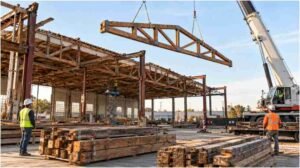

A beautiful precedent board can still produce bad research. Ten projects may look carefully documented, yet if one is judged by its floor plan, another by sustainability claims, and a third by photographs, almost nothing is genuinely comparable.
Learning how to compare multiple architecture case studies systematically means replacing that uneven collection of observations with a repeatable research method. The goal is not to decide which building is “best.” It is to discover why certain design decisions worked, under what conditions they worked, and whether those lessons can responsibly transfer to another project.
That distinction matters in US architectural research, where climate zones, seismic requirements, building codes, labor markets, urban density, and operational demands can vary dramatically from one case to another.
Start With the Question, Not the Buildings
A common mistake is selecting impressive buildings first and inventing a research question afterward.
Instead, define what the comparison needs to explain. You might ask why three public libraries achieve different daylight conditions, how adaptive-reuse projects handle aging envelopes, or which structural strategies allow similar educational buildings to achieve larger uninterrupted spaces.
The University of Illinois describes precedent resarch guide as studying existing architectural projects and their design processes to inform future design, with considerations including historical context, materiality, program, and design methodology.
That makes case selection important. Choose buildings that are similar enough to answer the same question but different enough to expose meaningful contrasts.
Comparing three libraries in different US climate zones could reveal environmental adaptations. Comparing a rural clinic, luxury hotel, and airport terminal probably produces less useful conclusions unless the research question specifically concerns something they share.
Build One Framework and Apply It to Every Case
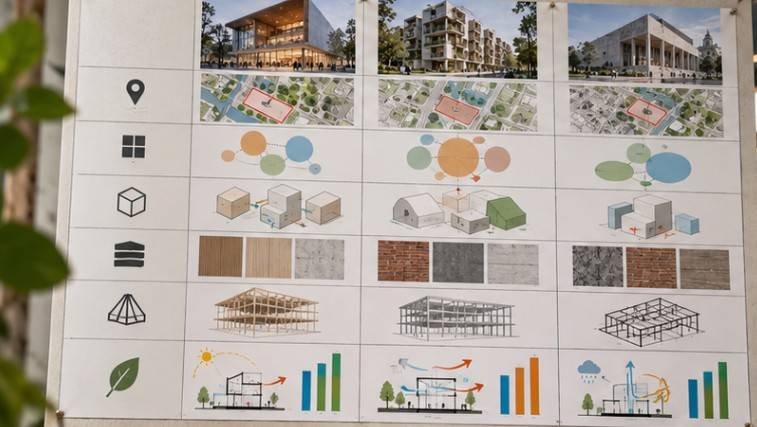
Researchers trying to understand how to compare multiple architecture case studies systematically need a fixed set of categories before gathering detailed evidence.
Research presented through the Architectural Research Centers Consortium argues for a standardized case-study methodology because consistent performance indicators allow meaningful cross-case comparisons and can eventually contribute to architectural guidelines and rules of thumb. A useful framework can be organized into five layers.
Context
Record location, climate, orientation, surrounding development, topography, transportation, zoning conditions, cultural setting, and relevant building regulations.
Context prevents false conclusions. Deep overhangs successful in Phoenix should not automatically become a universal facade recommendation for Seattle.
Program and Use
Compare gross floor area, occupancy, functional relationships, circulation, public/private zoning, flexible spaces, opening hours, and user groups.
Two buildings with identical square footage may perform very differently if one operates eight hours daily while another runs continuously.
Form and Spatial Organization
Study massing, building depth, height, courtyards, cores, circulation paths, sightlines, section relationships, and spatial sequences.
Diagramming is especially effective here because it strips away stylistic differences and reveals underlying organization.
Structure, Materials, and Envelope
Record structural systems, spans, grids, primary materials, facade assemblies, glazing ratios, shading, insulation strategies, and construction logic.
The US National Park Service’s architectural documentation standards are useful even outside historic preservation because they emphasize accurate drawings, photographs, written evidence, reliable sources, and clearly stated limitations.
Measured Performance
Where evidence exists, compare energy use, daylight, thermal comfort, water use, embodied carbon, acoustic conditions, occupancy satisfaction, or other relevant outcomes.
Do not confuse an architect’s stated intention with demonstrated performance.
Use a Comparison Matrix Instead of Separate Summaries
Writing five independent project descriptions encourages repetition. A matrix forces direct comparison.
| Evaluation factor | Case A | Case B | Case C |
| Climate and orientation | Record consistently | Record consistently | Record consistently |
| Gross area and occupancy | Normalize units | Normalize units | Normalize units |
| Structural system | Identify system/grid | Identify system/grid | Identify system/grid |
| Envelope strategy | Glazing, insulation, shading | Same criteria | Same criteria |
| Energy or comfort results | Verified metric | Data missing | Verified metric |
| Key contextual constraint | Code/site/budget | Code/site/budget | Code/site/budget |
| Transferable lesson | Evidence-based finding | Evidence-based finding | Evidence-based finding |
Normalize every numerical measure. Use either square feet or square meters throughout, not both randomly. Energy metrics should follow the same reporting basis, and percentages should refer to equivalent denominators.
The US Department of Energy similarly stresses standardized definitions and consistent procedures when evaluating building performance metrics. Without common metrics, comparisons lose reliability.
Just as important, write “data unavailable” where evidence is missing. An empty cell is more academically defensible than an assumption disguised as fact.
Compare Across Three Different Axes
Once the matrix is complete, do not simply read each column from top to bottom.
Compare Similar Problems Horizontally
Look across projects facing the same design challenge.
For example, if three museums require controlled daylight, compare aperture placement, shading, glazing, gallery depth, and measured illumination rather than discussing each museum independently.
Patterns become visible immediately.
Compare What Happens at Different Scales
A solution successful in a 5,000-square-foot pavilion may behave differently in a 300,000-square-foot institutional building.
Circulation distances grow. Structural grids change. Mechanical zoning becomes more complex. Fire and egress requirements may reshape the concept.
Scale can therefore be an explanatory variable rather than background information.
Compare Across Time
Buildings constructed decades apart should not be treated as though they faced identical constraints.
Energy codes, accessibility requirements, construction technologies, mechanical systems, material availability, and expectations for building performance have changed substantially.
For retrofit-focused studies, separating original design decisions from later interventions is particularly important. Research involving envelope performance can also be connected to methods for building thermal envelope optimization and passive solar design rather than attributing present-day performance entirely to the original architect.
Test the “Why,” Not Just the “What”
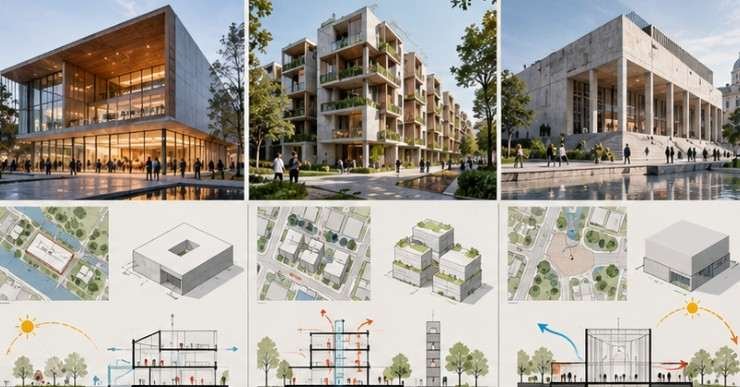
This is where architectural comparison becomes genuine research. Suppose three projects use exterior shading and one reports much lower cooling demand. It would be tempting to conclude that its shading system caused the improvement.
But perhaps the building also has lower internal loads, a different orientation, superior glazing, fewer operating hours, or a milder climate.
Comparative research guidance from BetterEvaluation recommends actively testing causal propositions, including investigating cases that contradict an apparent pattern. A successful case without the suspected causal factor—or an unsuccessful project that includes it—can expose weaknesses in the original explanation.
In architectural research, that means asking:
Did the courtyard improve comfort because of cross-ventilation, shading, landscaping, or lower occupancy density?
Did adaptive reuse reduce carbon because existing structure was retained, or were major new material quantities still required?
Did flexible planning actually support changing uses, or does the claim appear only in design descriptions?
Verify Design Intent Against Evidence
Architectural publications often describe what designers intended. Researchers need to determine what actually happened.
Cross-reference plans with sections, photographs with technical details, sustainability narratives with operational data, and project descriptions with post-occupancy evidence whenever possible.
AIA case studies are valuable because many document measurable attributes across areas such as resources, resilience, well-being, economy, and building performance rather than presenting architecture solely through photography.
Treat every source according to what it can prove. A photograph can confirm physical configuration. It cannot independently verify annual energy consumption.
Turn Findings Into Transferable Design Knowledge
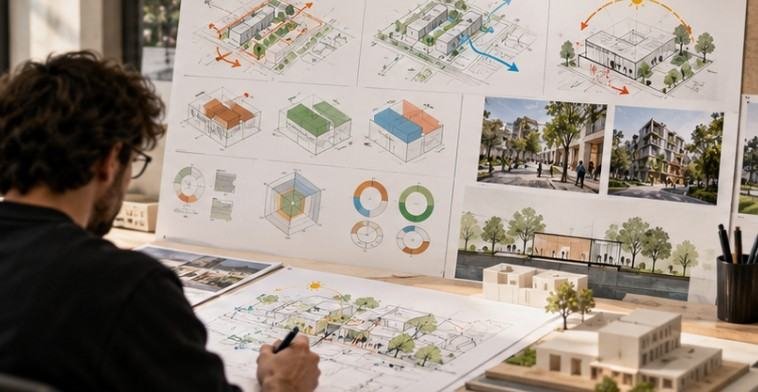
The final output should not be “Case A used brick while Case B used concrete.”
A stronger finding identifies a relationship:
“Projects with deeper floor plates required additional daylight strategies.”
“External circulation reduced conditioned area but increased exposure to weather.”
“Adaptive reuse preserved structural carbon while envelope upgrades determined subsequent operational performance.”
Then state the boundary conditions. A recommendation should explain where it is likely to work and where it may fail.
That is the real purpose of learning how to compare multiple architecture case studies systematically: transforming individual buildings into evidence that can guide future decisions without pretending architecture operates independently of context.
FAQ
1. How many architecture case studies should I compare?
Three to six cases are often manageable for detailed academic or studio analysis. More cases may strengthen patterns but also increase the risk of shallow data collection.
2. What should all architectural case studies have in common?
They should share characteristics directly relevant to your research question, such as typology, climate challenge, structural problem, performance target, or design strategy.
3. Should missing case-study data be estimated?
Usually not. Label unavailable information clearly unless you have a defensible calculation method and explicitly explain the assumptions behind the estimate.
4. Are diagrams better than written descriptions?
Neither replaces the other. Diagrams reveal spatial and formal relationships quickly, while written analysis explains context, causation, limitations, and performance evidence.
From Precedent Collection to Architectural Evidence
The difference between a precedent board and serious comparative research is not the number of buildings collected. It is the discipline of asking every building the same questions.
Define the research problem first, normalize the evidence, preserve contextual differences, mark missing information, and challenge apparent causal relationships before turning observations into recommendations. A project should never become a universal design rule simply because it photographs well. Once case studies are analyzed through a consistent framework, precedents stop being objects to imitate and become something far more valuable: evidence architects can question, test, and intelligently reuse.