
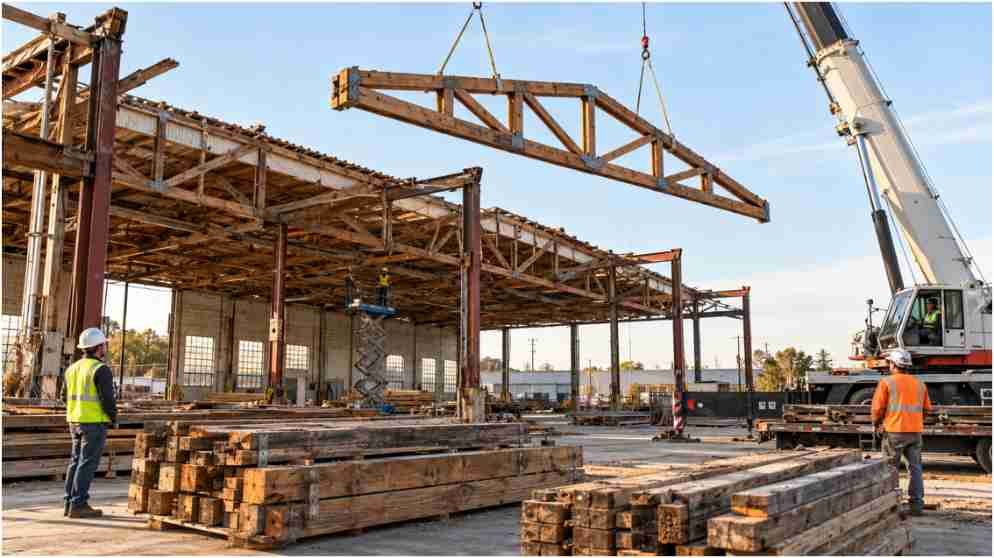
I watched an excavator hydraulic shear bite through a clear-span southern yellow pine truss five years ago, turning twelve thousand dollars of structural timber into splintered mulch in thirty seconds. That single destructive afternoon sent twenty-two tons of sound timber to an off-site landfill. Traditional demolition treats structural mass as an expensive liability to crush, haul, and bury. Implementing circular economy principles in building deconstruction flips that balance sheet entirely, converting an aging building into an above-ground material bank.
Selective deconstruction replaces brute-force demolition with surgical disassembly. Instead of pulverizing mixed assemblies, my site crews systematically dismantle structural and non-structural elements to capture their residual technical and financial value.
This deliberate workflow directly targets embodied energy reduction across the built environment, preventing high-grade materials from being downgraded into highway sub-base or buried beneath clay landfill caps.
Rethinking Demolition: The Closed-Loop Site
Linear construction practices rely on a single, wasteful path: extract, manufacture, assemble, and crush. When my teams strip a building today, we run an intentional closed-loop operation. Every square foot of an existing envelope contains embodied carbon, skilled historical labor, and manufactured capital that deserves preservation.
True deconstruction does not mean sorting through rubble piles after a high-reach excavator knocks down an exterior frame. It demands reverse engineering. We execute teardowns in the exact inverse sequence of the original installation trades.
By prioritizing recovery before destruction, we consistently divert 70% to 85% of total project mass away from municipal waste streams, channeling those assets directly back into regional supply chains.
The Ellen MacArthur Framework on the Job Site
The core tenets outlined by the Ellen MacArthur Foundation are not theoretical academic ideas. They are daily operating benchmarks on every commercial teardown I supervise.
Eliminating Contamination at the Source
Standard demolition pulverizes lead-painted components, drywall, asbestos-containing mastics, and structural lumber into a single hazardous mixture. Once contaminated, no recycler will touch it. We tackle this challenge through systematic source separation. We remove and quarantine non-structural fixtures, mechanical controls, and hazardous materials before touching structural framing. Clean separation keeps pure concrete fractions free of gypsum and preserves clean dimensional wood for direct resale.
Preserving High-Tier Component Integrity
Circular systems mandate that materials remain at their highest utility at all times. Downcycling an intact douglas fir beam into garden mulch destroys its structural grade. Our site protocol enforces a strict four-stage salvage hierarchy:
- Relocating entire structural assemblies intact when site footprints allow.
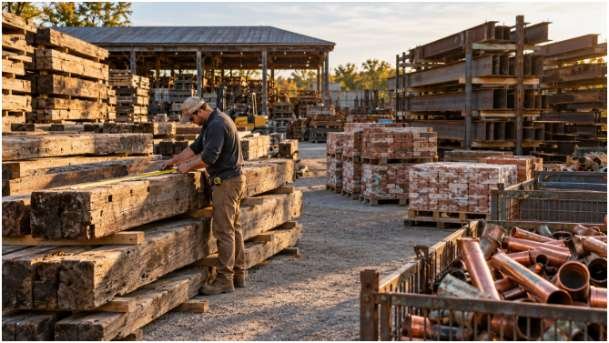
- Salvaging architectural elements, including storefront glazing, MEP equipment, heavy timber, and wide-flange steel beams, for direct structural reuse.
- Upcycling dimensional framing lumber into high-value architectural tongue-and-groove millwork.
- Downcycling unrecoverable brick and cast-in-place foundation slabs into crushed, compacted structural aggregate as a last resort.
Regenerating Natural Systems Through Material Offsets
Every ton of heavy timber or structural wide-flange steel saved on a tear-off job displaces an equivalent order of virgin material from a mill. Displacing new lumber preserves regional forest ecosystems and keeps existing carbon safely locked inside solid wood fibers.
The U.S. EPA notes that construction and demolition debris makes up more than double the volume of municipal solid waste generated across the United States. Reclaiming existing inventory significantly curbs virgin raw material demand while lowering industrial emissions.
Field Execution: The Two-Tier Dismantling Strategy
Surgical deconstruction requires clear logistical staging. We break every job into two distinct phases to protect workers and maintain clean material streams.
[Pre-Deconstruction Audit] ➔ [Phase 1: Soft Stripping] ➔ [Phase 2: Structural Uncoupling] ➔ [Direct Secondary Markets]
Non-Structural Soft Stripping
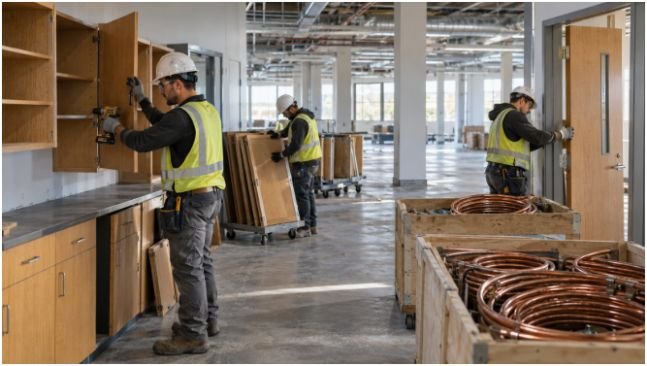
Soft stripping targets the interior finishes and service infrastructure. My crews use hand tools, pry bars, and cordless impact drivers to pull MEP systems, copper runs, architectural casework, drop ceilings, and commercial doors.
We clear the floor plates entirely so structural workers have clean, unobstructed decks to work from. Soft stripping also allows building engineers to incorporate passive cooling design considerations or plan solar thermal pathways during subsequent interior tenant refits.
Top-Down Structural Uncoupling
Once the building is stripped to its structural skeleton, structural rigging takes over. We operate top-down: roof deck first, followed by trusses, purlins, load-bearing walls, and intermediate floors.
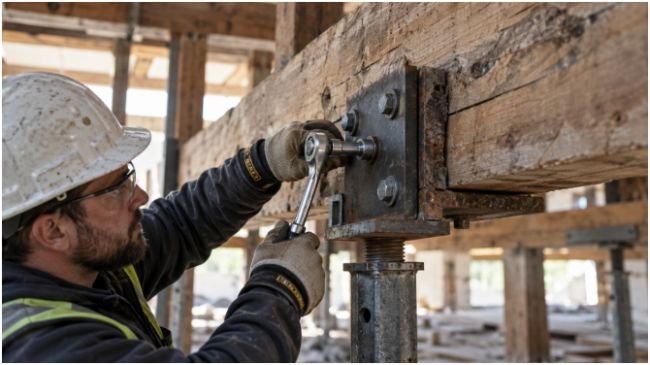
We do not use cutting torches unless structural fasteners have corroded beyond release. Unbolting structural joints, extracting structural lag bolts, and rigging intact structural components via crane preserves the structural testing certs needed for downstream building permits.
The Financial Equation: Labor Hours vs. Landfill Tipping Fees

Critics often claim deconstruction is too slow to justify the extra payroll. In practice, our financial reconciliations prove otherwise when a market carries moderate to high disposal costs.
During a recent commercial retrofit of an 18,000-square-foot light-industrial warehouse in the Midwest, we tracked labor hours, disposal fees, and salvage revenue against standard regional demolition bids.
- Demolition Bid Baseline: Total mechanical teardown bid stood at $86,000, driven by 420 tons of commingled waste billed at an 85per-tontippingfee(35,700 disposal expense alone).
- Deconstruction Execution: Our selective recovery plan required 480 additional technician labor hours, adding $26,400 in direct wages.
- Tipping Fee Avoidance: We diverted 335 tons of clean lumber, steel framing, and copper via on-site sorting, dropping landfill tipping fees to just $7,225.
- Salvage Value Recovery: Recovered structural components yielded $31,500 in direct resale to regional timber processors and architectural salvage distributors.
- Net Difference: Selective deconstruction returned a net project savings of $18,375 compared to mechanical demolition, while preserving 14,000 board feet of prime framing timber.
The project proved our structural recovery benchmark: when local tipping fees exceed $75 per ton and the building contains intact mechanical or timber framing, selective recovery consistently beats blunt demolition on total net cost.
Designing the Next Generation of Disassemblable Assets
The hardest buildings to dismantle are modern builds from the 1980s and 1990s. They are packed with chemical mastics, spray-foam glues, welded web connectors, and composite laminates. Less than 1% of standing commercial structures were designed to be taken apart.
Changing this paradigm requires architectural accountability through Design for Disassembly (DfD).
Modern engineering must specify exposed, bolted connections instead of field welds. Specifiers must choose dry-laid brick installations over structural mortar bonds and mechanical fasteners instead of polyurethane construction adhesives.
Leading international frameworks documented by the World Green Building Council emphasize that if a building cannot be systematically unbolted at its end of life, it was simply designed poorly from the start.
Stop Smashing Cash: Make Your Next Teardown Pay
Stop treating your aging facilities like disposable concrete packaging. Demolition day does not have to mean a parade of 40-yard roll-off dumpsters bound for the county landfill.
Before signing your next heavy-equipment mechanical demolition contract, hire an accredited salvage surveyor to run a complete pre-deconstruction audit.
Catalog your timber board footage, calculate the unbolting labor for your structural steel frame, and price out regional tipping fee avoidances.
You will keep tons of structural assets off the landfill floor and unlock thousands of dollars hidden right behind your drywall.
Frequently Asked Questions
1. How does building deconstruction differ from traditional demolition?
Deconstruction methodically dismantles structures piece by piece to salvage materials for direct reuse, whereas traditional demolition crushes assemblies into mixed landfill waste.
2. What materials offer the highest salvage value during deconstruction?
Heavy structural timber, wide-flange structural steel beams, copper plumbing, architectural millwork, and unbroken historical brick offer the highest resale value.
3. Does deconstruction always take longer than standard demolition?
Yes, deconstruction typically extends on-site schedules by two to three weeks, but avoided disposal tipping fees and material resale revenues offset holding costs.
4. What is a material passport in circular construction?
A material passport is a verified digital audit documenting the identity, condition, dimensions, and disassembly instructions for components installed inside a building.