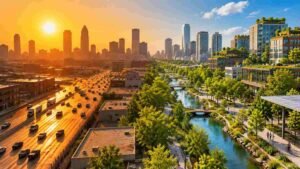
A city block can feel dramatically hotter than a nearby park, even when both locations share the same weather forecast. Dark roofs, asphalt roads, concrete buildings, limited vegetation, vehicle traffic, and air-conditioning systems absorb or generate heat throughout the day. After sunset, these surfaces slowly release stored energy, preventing neighborhoods from cooling down.
I see urban heat island mitigation strategies as more than environmental upgrades. When US cities apply them correctly, they can reduce cooling demand, improve outdoor comfort, manage stormwater, protect vulnerable residents, and create healthier neighborhoods.
The strongest approach combines green infrastructure, reflective materials, improved urban ventilation, hydrological cooling, energy efficiency, and lower transportation-related waste heat.
What Causes the Urban Heat Island Effect in US Cities?
The urban heat island effect occurs when developed areas remain warmer than nearby rural or less-developed locations. Buildings, parking lots, sidewalks, and roads replace vegetation and exposed soil with materials that absorb solar radiation.
Traditional asphalt and dark roofing can store substantial heat. Dense building arrangements may also restrict airflow and form urban canyons that trap warm air between structures. At the same time, vehicles, industrial systems, commercial buildings, and air-conditioning equipment release anthropogenic, or human-generated, heat into the surrounding environment.
The consequences extend beyond outdoor discomfort. Extreme heat can increase electricity demand, worsen air quality, raise cooling costs, and contribute to heat-related illnesses. US public-health agencies have also identified older adults, outdoor workers, people with existing medical conditions, and residents of low-wealth urban neighborhoods as particularly vulnerable during extreme heat events.
How Can Trees and Green Infrastructure Cool Urban Neighborhoods?
Expanding Urban Tree Canopy
Trees provide one of the most practical forms of neighborhood cooling. Their leaves block solar radiation before it reaches sidewalks, roofs, streets, and building walls. Trees also release moisture through evapotranspiration, which can cool the surrounding air.
Cities should prioritize native or climate-adapted, drought-tolerant shade trees along pedestrian routes, school zones, transit stops, parking areas, and west-facing building exposures. Planting location matters because a tree that shades a frequently used sidewalk may protect more people than one placed in an isolated median.
Urban forestry programs must also fund watering, pruning, soil management, root protection, and replacement. Planting thousands of trees creates little long-term value when municipalities cannot keep them healthy.
Installing Green Roofs
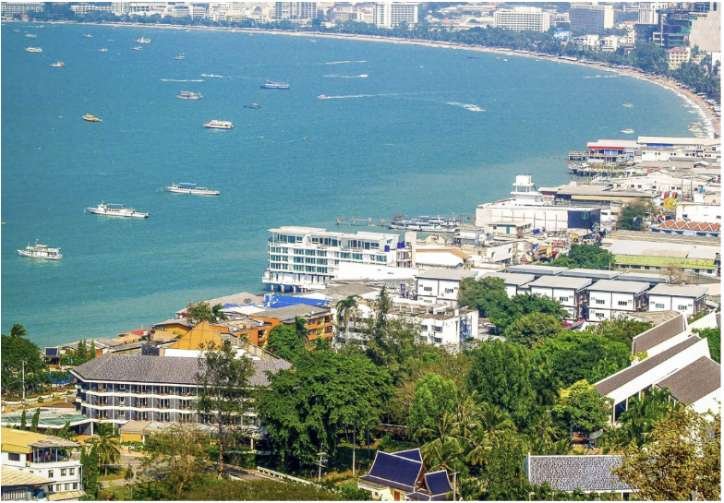
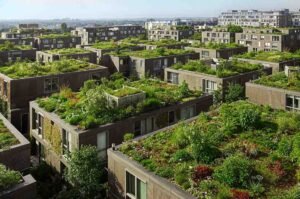
Green roofs replace heat-absorbing rooftop surfaces with vegetation and growing media. They provide shade, cool the air through evapotranspiration, slow stormwater runoff, and add insulation to the building below.
These systems work particularly well on flat-roofed apartment buildings, schools, offices, and commercial properties in dense neighborhoods with limited ground-level planting space. However, owners must assess structural loading, waterproofing, drainage, irrigation, and maintenance before installation.
Adding Green Walls and Vegetated Facades
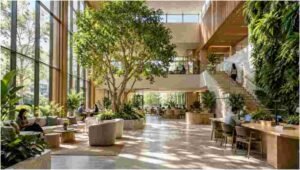
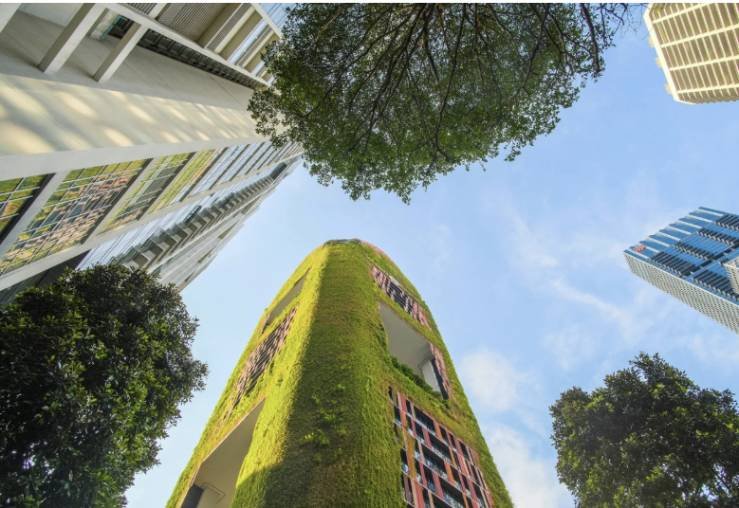
Green walls and facades bring vegetation to vertical building surfaces. Rather than significantly increasing a wall’s thermal mass, they cool primarily by shading the building envelope, creating a buffer from direct sunlight, and supporting evapotranspiration.
They can reduce exterior wall heat gain on sun-exposed facades while adding greenery where sidewalks are too narrow for large trees. Plant selection, irrigation, attachment systems, and ongoing maintenance determine whether these vertical ecosystems remain effective.
Do Reflective Roofs, Walls, and Pavements Reduce Urban Heat?
Cool Roofs
Cool roofs use light-colored or specially engineered materials that reflect more sunlight and release absorbed heat efficiently. Their performance commonly depends on solar reflectance, thermal emittance, and the Solar Reflectance Index.
The Cool Roof Rating Council maintains product ratings that help building owners compare roofing materials. Cool roofs can reduce roof-surface temperatures, lower heat transfer into buildings, and decrease air-conditioning demand, particularly in hot US climates and on large low-sloped roofs.
Cities can encourage their use through building codes, rebates, tax incentives, and roof-replacement standards. Local climate still matters because energy benefits may vary in areas with long heating seasons.
Cool Walls
Exterior walls can absorb substantial solar heat, especially on west-facing facades and inside narrow urban canyons. Cool walls use reflective paints, coatings, or materials that reject more solar energy and efficiently release absorbed heat.
They can reduce wall-surface temperatures and limit heat transfer into buildings. Designers should still consider glare, surrounding windows, neighboring buildings, and pedestrian exposure before selecting highly reflective finishes.
Cool Pavements
Dark asphalt streets and parking lots can function as large heat reservoirs. Cool pavements replace or modify these surfaces with reflective concrete, light-colored aggregates, specialized coatings, permeable materials, or grass-paver systems.
Permeable pavement can support evaporative cooling while reducing stormwater runoff. However, cities must evaluate glare, durability, winter performance, traffic demands, and maintenance. Sediment can clog permeable surfaces, while highly reflective coatings may redirect heat toward pedestrians or nearby structures.
How Can Urban Design Improve Wind Flow and Ventilation?
Urban geometry strongly influences how heat moves through a neighborhood. Street width, building height, spacing, orientation, and vegetation placement can either support natural airflow or trap hot air. These design principles also support urban planning strategies for reducing greenhouse gas emissions by improving energy efficiency, encouraging cooler cities, and lowering the demand for artificial cooling
Planners can preserve wind corridors by maintaining connected open spaces and aligning new streets, where practical, with dominant seasonal wind directions. Building orientation and varied structural heights can also reduce tightly enclosed urban canyons.
In hot and humid regions, ventilation may be as important as shade. Cities should avoid placing dense vegetation or large structures where they block beneficial breezes. Digital modeling and microclimate simulations can help planners test airflow before approving major developments.
Can Water Features Lower Urban Temperatures?
Blue infrastructure uses water to support localized cooling. Urban lakes, ponds, restored wetlands, fountains, retention basins, water mirrors, and misting systems can reduce nearby temperatures through evaporation.
These features generally perform best in hot, dry conditions. Their cooling effect may be weaker in humid climates, and drought-prone US cities must carefully consider water consumption.
Captured stormwater, recycled water, and properly designed retention systems can reduce reliance on potable water. When cities combine blue infrastructure with trees, rain gardens, bioswales, and parks, they create blue-green networks that manage flooding while improving thermal comfort.
How Can Cities Reduce Human-Generated Waste Heat?
Not all urban heat comes from the sun. Combustion engines, industrial equipment, poorly insulated buildings, refrigeration systems, and air conditioners release heat directly into city streets.
Clean transportation can reduce this anthropogenic heat. Electric vehicles generally release less direct engine heat than gasoline or diesel vehicles, but simply replacing every car with an EV will not solve urban heating.
Cities can achieve broader benefits by expanding reliable public transit, safe cycling routes, walkable mixed-use neighborhoods, and transportation-demand reduction.
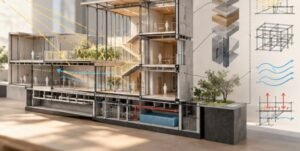
Energy-efficient buildings also play a major role. Better insulation, air sealing, exterior shading, high-performance windows, efficient heat pumps, and passive cooling can reduce dependence on conventional air conditioning. Lower cooling demand means buildings release less concentrated waste heat outdoors during peak summer conditions.
How Should US Cities Prioritize Urban Cooling Investments?
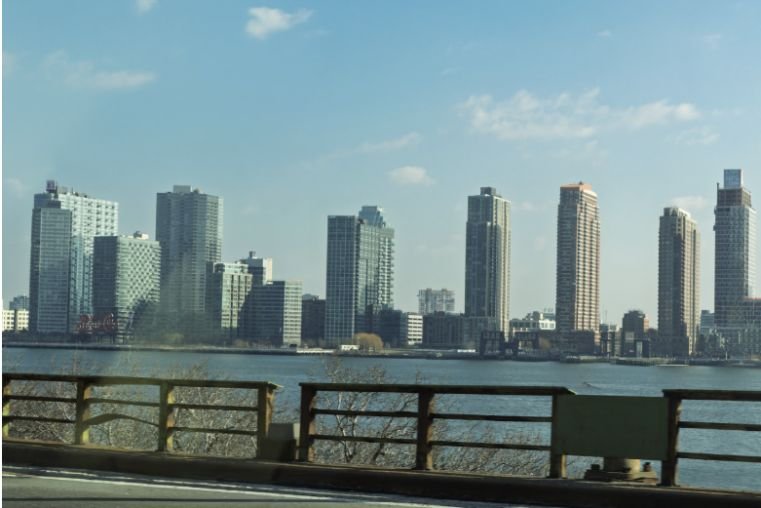
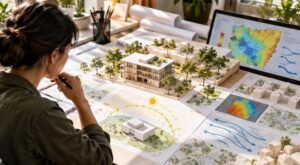
The most effective urban heat island mitigation strategies begin with heat mapping. Cities can combine satellite measurements, street-level sensors, tree-canopy data, land-surface information, energy use, public-health records, and community feedback to identify the hottest and most vulnerable locations.
Investment should focus on neighborhoods with high pavement coverage, limited shade, older housing, frequent transit use, and residents who face greater health or financial risks.
Decision-makers must also distinguish between surface cooling and ambient air cooling. A reflective roof may become much cooler without producing an equal temperature reduction across the surrounding neighborhood.
Cities should combine immediate protections with long-term changes. Shade structures, cool roofs, cooling centers, and misting stations can provide faster relief. Mature tree canopy, redesigned streets, wetlands, zoning reform, and energy-efficient development require more time but produce wider benefits.
Frequently Asked Questions (FAQs)
1. What is the fastest way to reduce heat in a city?
Shade can provide immediate pedestrian relief, while cool-roof coatings and reflective surface upgrades may deliver relatively fast building-level benefits.
2. Are cool roofs or green roofs better?
Cool roofs are usually simpler and less expensive. Green roofs cost more but can also manage stormwater, support biodiversity, and add usable green space.
3. Do electric vehicles reduce the urban heat island effect?
EVs can reduce direct combustion-engine heat, but public transit, walking, cycling, reduced traffic, and efficient land use can produce broader urban cooling benefits.
4. Why should cities map heat before planting trees?
Heat maps help cities place trees and other investments where residents face the greatest exposure, rather than distributing limited resources without considering actual risk.
What Is the Best Strategy for Reducing Urban Heat?
No single intervention can cool every building, street, and neighborhood. I recommend a layered approach that matches each solution to local climate, urban form, budget, maintenance capacity, and community need.
The strongest urban heat island mitigation strategies connect trees, green roofs, green walls, cool roofs, cool walls, reflective or permeable pavements, wind corridors, water-sensitive design, clean transportation, and energy-efficient buildings.
When US cities coordinate these tools through building codes, capital projects, transportation planning, public-health programs, and community participation, they can create cooler and more resilient urban environments.