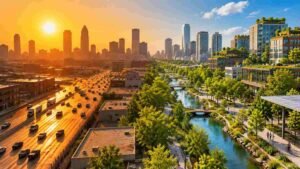
A railway hanging above Manhattan, a contaminated gas plant in Seattle, and a neglected half-acre playground in Richmond may seem to have little in common. Yet each became an opportunity to rethink what public space could do for the surrounding city.
That is what makes urban park revitalization case studies worth examining closely. The best projects do not simply replace old landscaping with newer amenities. They solve larger urban problems through adaptive reuse, flood management, brownfield remediation, pedestrian connectivity, community ownership, and ecological restoration. Across the United States, these strategies are turning difficult sites into active pieces of urban infrastructure.
What Strategies Are Transforming Urban Parks Today?
When I compare successful park redevelopment projects, I see several recurring strategies. Some cities reclaim obsolete infrastructure. Others allow parks to store stormwater during major storms. Community-led projects give residents meaningful control over design and management, while post-industrial parks demonstrate how contaminated landscapes can recover without completely erasing their history.
The strongest projects often combine several of these approaches rather than relying on one design idea.
The High Line: How Can Abandoned Infrastructure Become a Park?
New York City’s High Line is perhaps America’s best-known example of adaptive infrastructure reuse.
The 1.45-mile elevated freight railway stopped operating in 1980 and was eventually transformed into a linear park. Designers retained the character of the former rail structure while introducing pedestrian paths, gathering spaces, overlooks, and planting inspired partly by the vegetation that had colonized the abandoned railway.
Landscape Performance research found that plant diversity increased from 245 species and cultivars to approximately 500. The project also became a major pedestrian destination and economic catalyst for Manhattan’s West Side.
What Can Cities Learn From the High Line?
Obsolete transportation infrastructure does not always need demolition. Rail corridors, viaducts, and similar structures can become public-space networks when designers preserve their identity while introducing new functions.
Cascades Park: Can a Park Double as Flood Infrastructure?
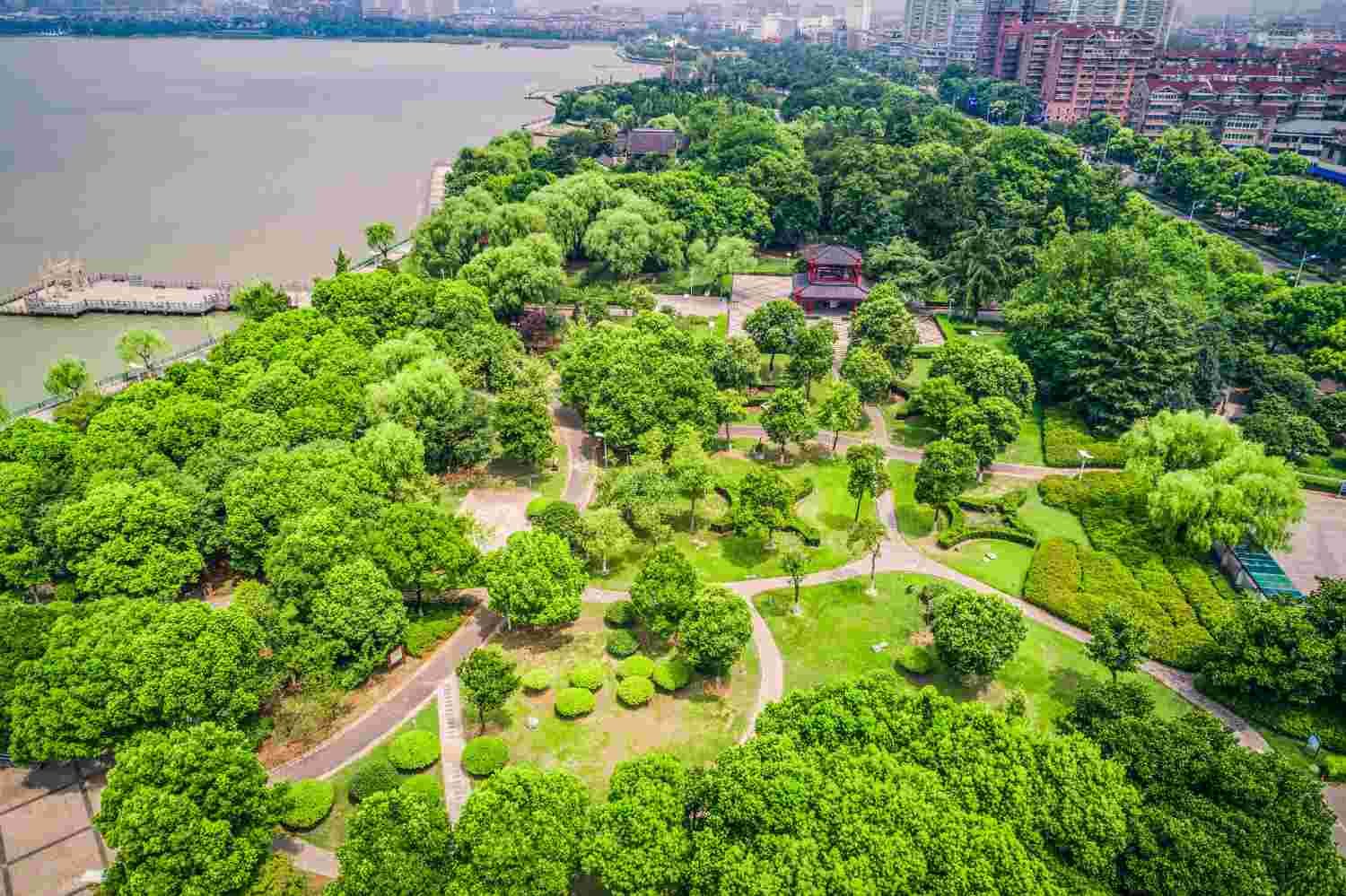
Cascades Park in Tallahassee, Florida, demonstrates a different model: the floodable urban park.
The site had industrial contamination and serious stormwater problems before redevelopment. Today, underground channels, open streams, retention ponds, and a large box culvert allow the landscape to manage runoff and intentionally accommodate water during major storms.
The park also includes an amphitheater, trails, play areas, fountains, and the Smokey Hollow Commemoration, which recognizes the historically Black neighborhood displaced during twentieth-century urban renewal.
This combination turns a municipal stormwater system into an everyday recreational landscape.
Why Does Cascades Park Matter for Climate-Resilient Design?
Instead of separating flood-control infrastructure from public life, the project makes resilience part of the park itself. It provides a useful model for U.S. cities facing heavier rainfall, flash flooding, and increasing pressure on conventional drainage systems.
Pogo Park: What Happens When Residents Lead Revitalization?
Pogo Park in Richmond, California, shows why community participation can become much more than a consultation exercise.
The organization focused on Elm Playlot, a neglected half-acre park in Richmond’s Iron Triangle neighborhood. Residents were recruited, trained, and paid to help plan, design, build, and manage the space. A community-generated design emerged in 2009, followed by funding and construction partnerships.
The approach connected park renovation with workforce development, neighborhood ownership, children’s play, and community health. Research on the project also reported improvements in social connection, perceived safety, and neighborhood well-being.
Why Is Community Ownership Important in Park Redevelopment?
Pogo Park reminds me that residents should not simply be asked what playground equipment they prefer. Deep participation can build skills, employment opportunities, trust, and long-term stewardship around a public space.
Gas Works Park: Can Industrial Remediation Preserve History?
Seattle’s Gas Works Park occupies the site of a former manufactured-gas plant that operated from 1907 until 1956.
Instead of completely removing its industrial identity, the park retained major structures from the former facility and incorporated them into the landscape. That choice made the site’s industrial history visible rather than replacing it with an anonymous green space.
The environmental story is more complicated. Historic operations contaminated soil, groundwater, and sediment, and multiple cleanup actions have occurred since the 1970s. Additional shoreline and sediment remediation remains part of Washington State’s cleanup program.
What Does Gas Works Park Teach About Adaptive Landscape Reuse?
Industrial heritage can become a placemaking asset, but preservation must work alongside long-term environmental remediation and public safety. That balance makes Gas Works Park particularly valuable for post-industrial landscape research.
Depot Park: How Can Brownfield Cleanup Support Neighborhood Renewal?

Gainesville’s 32-acre Depot Park transformed a former brownfield into a major community destination.
Extensive remediation preceded the park’s development, after which the landscape incorporated stormwater facilities, wetlands, recreation, trails, and the restored historic depot.
The impact reached beyond the park boundary. Landscape Performance research found a 14.8% increase in mean assessed parcel values within a quarter mile between 2017 and 2018, compared with a 4% increase downtown during the same period. The rate of new business openings also strengthened after the park opened.
Depot Park shows how environmental cleanup, historic preservation, recreation, and economic revitalization can reinforce one another.
Buffalo Bayou Promenade: How Can Neglected Infrastructure Become a Waterfront Asset?
Houston’s Buffalo Bayou Promenade transformed 23 acres of neglected greyfield and freeway-edge landscape into an accessible waterfront park.
Native and naturalized plantings, trails, lighting, public art, 12 street-to-bayou connections, and a pedestrian bridge helped make previously disconnected land usable again. The project increased flood-storage capacity by 18.65 acre-feet, while its trees intercept more than 337,000 gallons of stormwater runoff annually.
It demonstrates how green infrastructure can improve flood resilience without sacrificing recreation, connectivity, or placemaking.
Klyde Warren Park: Can Cities Repair the Damage Created by Highways?
Dallas took yet another approach by constructing Klyde Warren Park above the eight-lane Woodall Rodgers Freeway.
The 5.2-acre deck park reconnects Uptown with the Arts District while supporting lawns, gardens, children’s areas, water features, performances, and everyday recreation.
Research documented more than one million visitors during its first year and projected $312.7 million in associated economic development. Trees and vegetation also provide stormwater interception and measurable cooling benefits.
For cities divided by transportation corridors, the project demonstrates how carefully designed deck parks can restore pedestrian connections without removing the infrastructure below.
What Do Successful Urban Park Revitalization Case Studies Have in Common?
The clearest lesson from these urban park revitalization case studies is that successful redevelopment rarely solves only one problem.
The High Line combines adaptive reuse with pedestrian infrastructure. Cascades Park merges flood control with recreation and cultural memory. Pogo Park links community ownership with neighborhood development. Gas Works Park connects industrial preservation with environmental recovery. Depot Park pairs brownfield remediation with economic revitalization, while Buffalo Bayou and Klyde Warren Park repair physical barriers created by infrastructure.
For architects and planners, this means evaluating parks as systems rather than isolated landscapes. Connectivity, accessibility, stormwater management, biodiversity, social equity, programming, historic context, safety, and long-term maintenance should all influence design decisions.
Frequently Asked Questions About Park Revitalization
1. What is urban park revitalization?
Urban park revitalization is the process of transforming neglected, underused, damaged, or outdated public landscapes through new design, infrastructure, ecological restoration, accessibility improvements, programming, and community participation.
2. What is an example of adaptive reuse in an urban park?
The High Line in New York City is a leading example because an abandoned elevated freight railway was reused as a pedestrian landscape and public park.
3. How can parks improve climate resilience?
Parks can incorporate retention ponds, rain gardens, restored waterways, permeable surfaces, native vegetation, floodable landscapes, and increased tree canopy to manage stormwater and reduce climate-related risks.
4. Why is community engagement important in park redevelopment?
Residents understand everyday problems that designers may not immediately see. Meaningful participation can improve programming, accessibility, safety, cultural relevance, stewardship, and long-term community support.
Final Thoughts
The most useful urban park revitalization case studies show that park design is no longer only about creating attractive green space. America’s strongest projects increasingly operate as environmental, transportation, social, cultural, and economic infrastructure at the same time.
Similar lessons appear in brownfield redevelopment architecture case studies, where successful transformation depends on addressing environmental constraints while creating places that support long-term community use.
Whether a city is dealing with abandoned railways, contaminated industrial property, flooding, neglected neighborhood parks, disconnected waterfronts, or highway barriers, these examples show that difficult sites can become valuable civic assets when revitalization responds to the real conditions surrounding them.