

When I consider the future of manufacturing, I see a clear shift away from resource-intensive production and toward materials that can be grown, renewed, recovered, or returned to natural cycles. Bio based materials for digital fabrication bring this possibility into design studios, laboratories, workshops, and construction environments by combining renewable feedstocks with accurate computer-controlled processes.
This combination does not automatically make every product sustainable. However, it can support material-efficient production, complex customised forms, local sourcing, and better end-of-life planning when designers consider the complete lifecycle.
What Are Bio-Based Materials?
Bio-based materials are produced wholly or partly from renewable biological resources. Common feedstocks include cellulose, wood fibres, cork, algae, starch, fungi, natural oils, agricultural residues, and plant-derived polymers.
Bio-based does not necessarily mean biodegradable or compostable. A material may contain renewable ingredients while still using synthetic binders, chemical coatings, or energy-intensive manufacturing methods. Its environmental value depends on sourcing, processing, durability, transportation, maintenance, and disposal.
This distinction is important because a material should not be judged by its ingredients alone. Designers must examine the complete system in which it is produced and used.
How Digital Fabrication Improves Material Efficiency
Digital fabrication uses computer-generated information to control manufacturing equipment. Common methods include additive manufacturing, CNC milling, laser cutting, robotic extrusion, and automated fiber placement.
These processes can place material only where it is structurally or functionally required. This reduces unnecessary cutting, offcuts, moulds, and excess mass. Digital tools also support customised components, lightweight geometries, modular assemblies, and rapid prototype development.
Material behaviour can be included in the design process. Wall thickness, toolpath direction, infill density, layer height, and structural reinforcement can be adjusted according to the properties of the selected feedstock.
However, inefficient toolpaths, failed prints, unsuitable mixtures, and excessive drying energy can reduce these benefits. Successful production requires coordination between digital geometry and physical performance.
Leading Renewable Materials for Fabrication
Cellulose and Wood-Fibre Composites
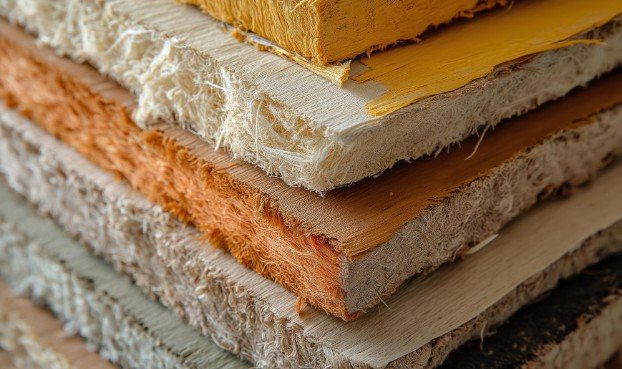
Cellulose is abundant, lightweight, and suitable for extrusion, moulding, pressing, and sheet-based fabrication. Wood fibres can reinforce printable pastes or thermoplastic compounds, increasing stiffness while reducing dependence on fossil-derived fillers.
Moisture remains a major concern. Plant fibres can absorb water, swell, shrink, or distort. Fibre length, binder selection, drying conditions, and nozzle diameter must therefore be carefully controlled.
Mycelium Composites
Mycelium is the root-like network formed by fungi. It can grow around agricultural residues to create lightweight blocks, panels, packaging, acoustic products, and temporary structures.
Digitally fabricated moulds can guide its growth into complex forms. Robotic systems may also deposit prepared mixtures in controlled patterns. Mycelium offers a distinctive natural texture and low-density performance, but production requires carefully managed temperature, humidity, sterilisation, and drying.
Cork and Agricultural Waste
Cork granules, sawdust, straw, rice husks, grape waste, and coffee grounds can become fillers in printed or liquid composite molding. These materials create value from residues that might otherwise be burned, discarded, or underused.
Their natural variability creates challenges. Reliable fabrication requires clean feedstocks, consistent particle sizes, stable binders, and repeatable mixing procedures.
Algae and Plant-Derived Polymers
Alginate, which is commonly derived from seaweed, can act as a binder or gel-forming ingredient in experimental printing mixtures. Biopolymers such as PLA and PHA can also be processed through extrusion systems.
PLA is widely available and relatively easy to print. Nevertheless, its limited heat resistance and dependence on specialised composting facilities complicate its environmental profile. Material selection must reflect realistic service and disposal conditions.
Matching Materials to Fabrication Methods
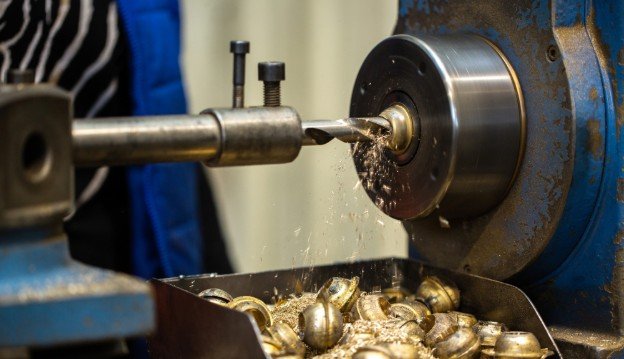
Every fabrication method places different demands on a material.
Extrusion printing requires suitable viscosity, smooth flow, strong layer adhesion, and predictable curing. A mixture that is too fluid may collapse after deposition, while one that is too dry may block the nozzle.
CNC milling requires materials that resist tearing, chipping, and excessive tool wear. Laser cutting depends on safe emissions, suitable thickness, and clean edge formation. Robotic fibre placement requires controlled tension and dependable bonding between layers.
Small-scale testing should take place before full production, especially when developing custom building components using 3D printing. Early prototypes can reveal cracking, warping, shrinkage, clogging, weak joints, or surface defects before they become expensive failures.
Properties That Influence Fabrication
Strength is only one consideration. Designers should also assess:
- Moisture content
- Density and weight
- Fibre length
- Curing time
- Thermal behaviour
- Layer adhesion
- Dimensional stability
- Biodegradation rate
- Resistance to fire and weather
For extrusion-based production, rheology is particularly important. The mixture must flow through the equipment while remaining stable after deposition.
Digital models should respond to these limitations. Unsupported spans, wall thicknesses, layer heights, connection points, and toolpath directions must reflect what the material can physically achieve.
Potential Architectural and Product Applications
Renewable composites are being explored for acoustic panels, interior partitions, furniture, packaging, insulation, exhibition structures, façade prototypes, customised moulds, and temporary pavilions.
Non-load-bearing products often reach practical use first because they present fewer structural risks. Temporary installations also offer useful testing opportunities, provided components have a planned route for reuse, recycling, composting, or biological recovery.
Wider construction use will require dependable evidence concerning fire safety, moisture resistance, weathering, toxicity, maintenance, structural strength, and regulatory compliance.
Evaluating the Complete Lifecycle
Renewable content represents only one stage of environmental performance. A meaningful assessment must examine where the feedstock originates, how it is processed, which additives are included, how far it travels, how long the product remains useful, and what happens after disposal.
A durable material may produce a better outcome than a biodegradable alternative if it performs effectively for decades. In contrast, a temporary product should not rely on coatings or adhesives that prevent safe recovery.
Local sourcing, low-impact binders, efficient toolpaths, repairable assemblies, and separable components can improve the overall lifecycle.
Challenges and Future Opportunitie
Current challenges include biological variability, moisture sensitivity, inconsistent feedstock quality, slow curing, limited standards, uncertain durability, and difficulty scaling experimental mixtures.
Digital production also presents major opportunities. Geometry can be adapted to compensate for material weaknesses, while local waste streams can become useful manufacturing resources. Sensors, material databases, simulation tools, and automated quality control could improve consistency further.
The most credible projects will combine environmental evidence with measurable fabrication performance rather than treating sustainability as a visual trend.
Frequently Asked Questions
1. What are bio based materials for digital fabrication?
They are renewable or biologically derived materials prepared for computer-controlled manufacturing methods such as 3D printing, CNC machining, laser cutting, and robotic production.
2. Are all bio-based products biodegradable?
No. Renewable content does not guarantee biodegradability. Binders, coatings, additives, manufacturing processes, and disposal conditions determine how a finished product behaves after use.
3. Which renewable material is easiest to print?
PLA is generally accessible for conventional filament printing. Cellulose, cork, algae, mycelium, and agricultural-waste mixtures often require customised recipes and specialised extrusion equipment.
4. Can these materials be used in buildings?
Yes, especially for acoustic, insulating, interior, decorative, and temporary components. Structural applications require detailed testing for fire, moisture, strength, weathering, and long-term durability.
Final Perspective
I believe the greatest opportunity is not simply replacing one conventional material with a renewable alternative. It is redesigning the relationship between resources, machines, geometry, performance, and product life.
Bio Based Materials for Digital Fabrication can support lighter, lower-waste, and more adaptable production when sourcing, additives, durability, and recovery are considered from the beginning. The strongest results will come from honest testing, material-aware design, and manufacturing systems that value the entire lifecycle rather than the novelty of a printed object.