
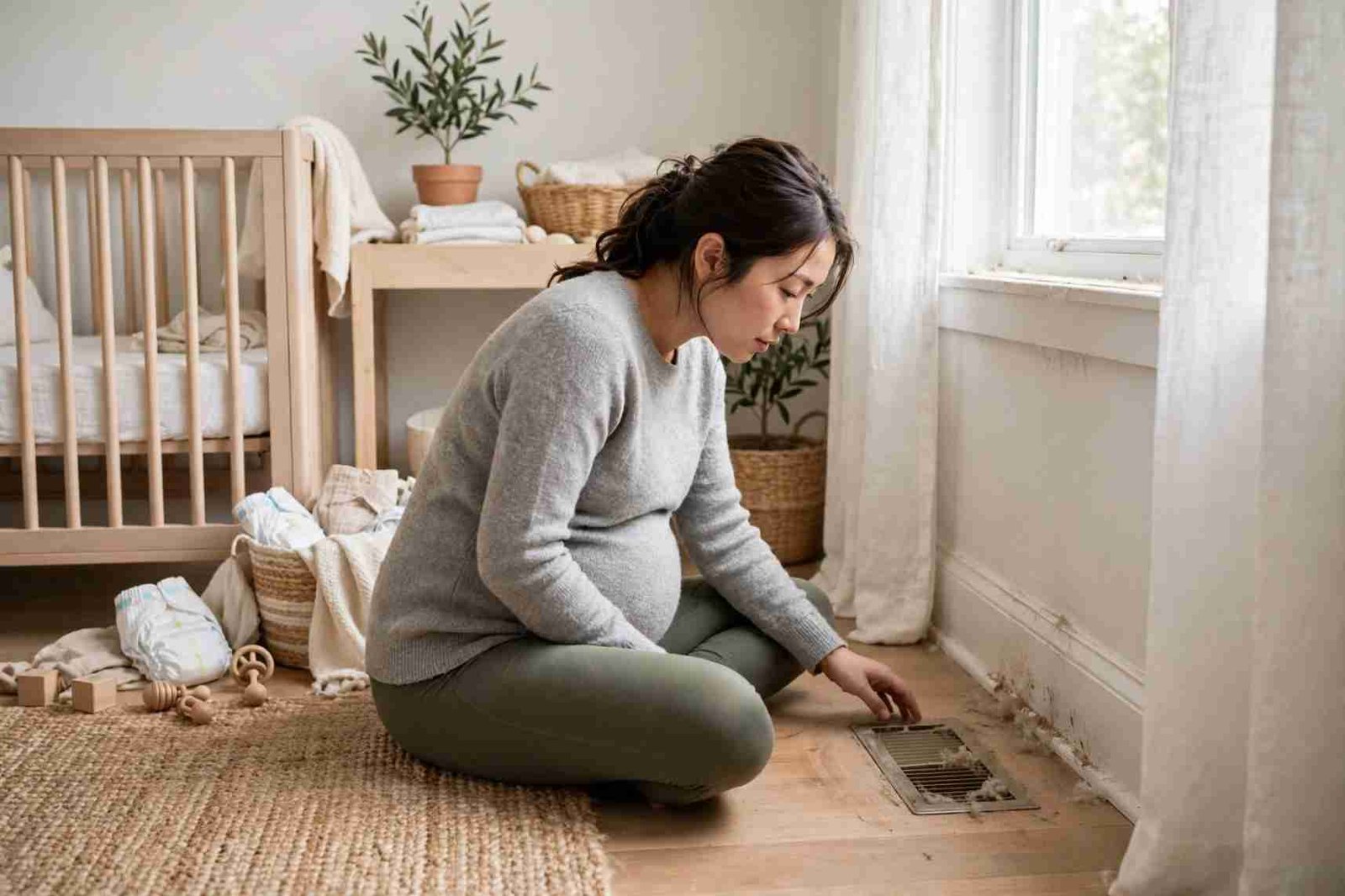
Few instincts are as strong as the third-trimester urge to nest. You fold onesies, assemble the crib, and organize baby blankets. Yet, as expectant parents sit on the nursery floor to visualize their baby’s space, their gaze often lands somewhere unexpected: dusty air registers and scuffed baseboards.
It is easy to overlook these low surfaces during routine cleaning. But once an infant arrives, baseboards sit directly in their reach, and vents blow air into developing lungs. Newborns breathe 40 to 60 times per minute—more than double an adult’s rate—making clean air and dust-free perimeters essential.
Sanitizing these surfaces does not require harsh chemicals. With gentle cleaners, microfiber cloths, and systematic technique, you can eliminate allergens and bacteria safely before your newborn arrives.
1. Why Baseboards and Vents Matter for Infant Health
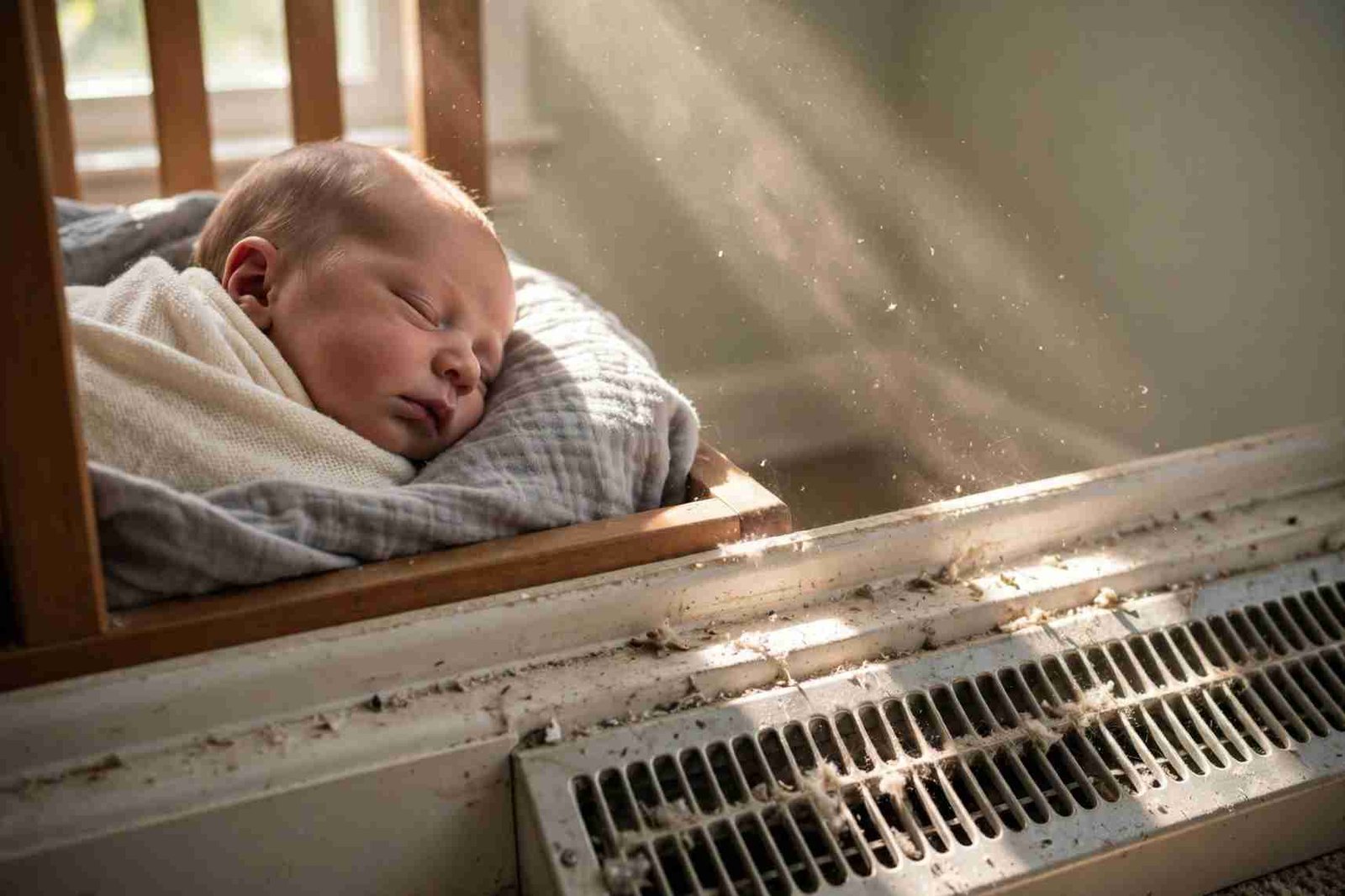
Sanitizing baseboards and vents protects newborns from inhaling concentrated airborne particulate, mold spores, and pet dander that settle near floor level where infants sleep and crawl.
Indoor dust is not harmless dirt. It is a mix of shed skin cells, dust mite droppings, pollen, and chemical residues tracked from outside. Because particulates settle along moldings and inside registers, HVAC systems circulate these irritants whenever the fan starts.
Prioritizing nursery air quality before birth minimizes respiratory stress during the critical first weeks of life. Removing settled debris prevents fine particles from being kicked into the air during play, creating a clean breathing zone around your baby’s crib.
Beyond removing dust and airborne irritants, thoughtful nursery design can also contribute to a more calming indoor environment. Incorporating natural materials, greenery-inspired elements, and nature-connected design principles can support this approach. Exploring biophilic design strategies through real-world case studies can offer inspiration for creating healthier and more welcoming interior spaces.
2. Choosing Baby-Safe, Fume-Free Cleaning Solutions
Sanitize nursery surfaces using plant-based surfactants, diluted white vinegar, and 3% hydrogen peroxide rather than aerosol sprays, bleach, or synthetic fragrances.
A common nesting misconception is that an area must smell like bleach to be clean. In reality, chemical fumes and volatile organic compounds (VOCs) irritate an infant’s delicate airways.
Build a safe cleaning kit with gentle ingredients:
- Cleaning Base: Warm water mixed with unscented castile soap lifts grime without residue.
- Grime Cutters: Equal parts distilled water and white vinegar dissolve sticky film along trim.
- Sanitizing Power: Standard 3% hydrogen peroxide acts as an effective non-toxic disinfectant for nurseries, neutralizing bacteria and mold without harsh off-gassing.
Never mix vinegar and hydrogen peroxide in the same bottle, as this creates peracetic acid, a harsh respiratory irritant.
3. How to Clean and Sanitize HVAC Vents and Return Grilles
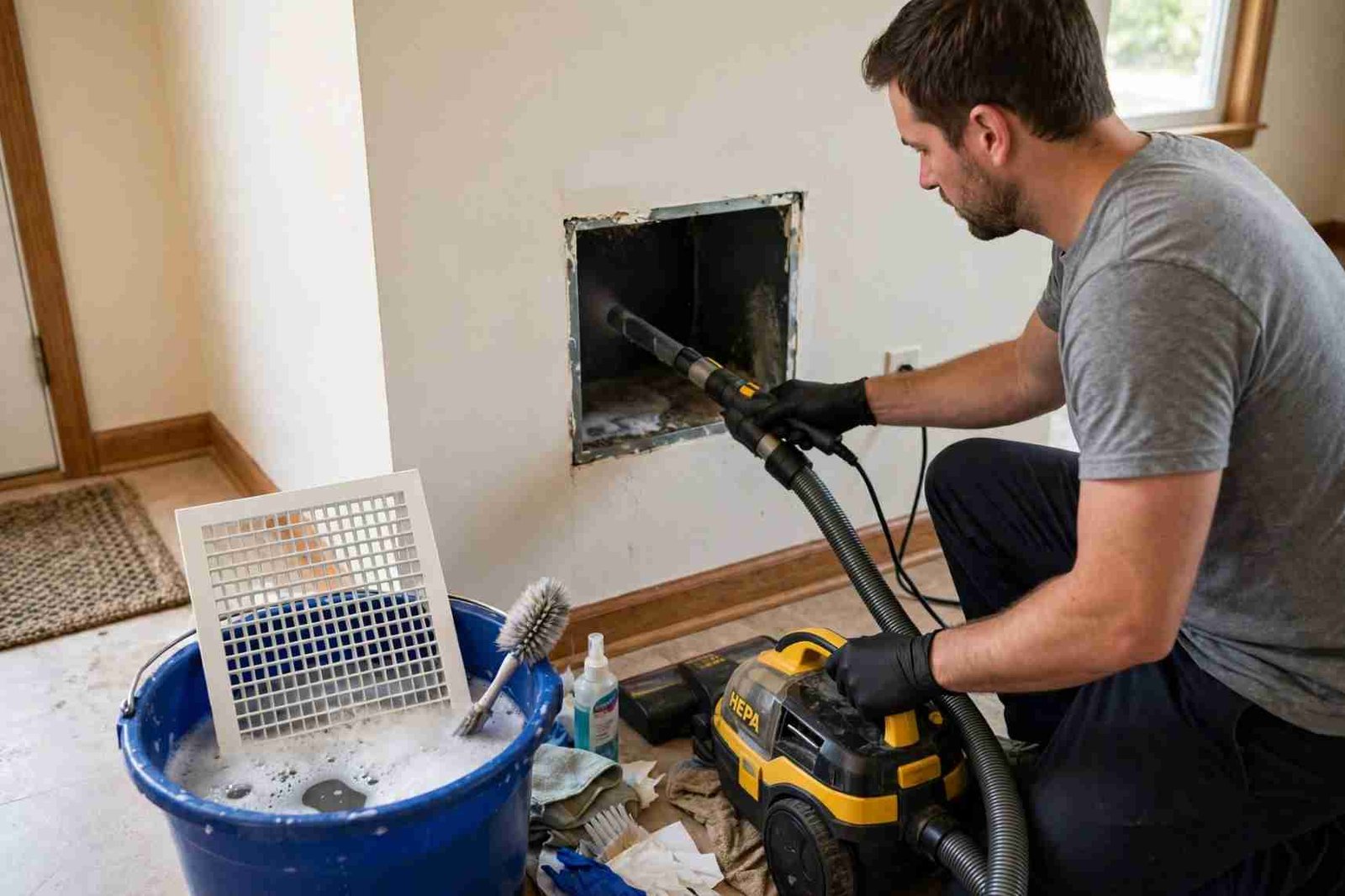
To sanitize HVAC vents effectively, turn off the thermostat, unscrew the grilles, vacuum inside duct openings with a HEPA vacuum, and wash vent covers in warm soapy water.
Wiping a vent cover while attached to the wall pushes dust deeper into ductwork. Removing registers ensures a thorough clean.
Beyond keeping air vents free from dust, maintaining a comfortable indoor environment also depends on how effectively a home manages heat, insulation, and natural airflow. Understanding thermal envelope optimization and passive solar design can provide useful insights into improving indoor comfort and overall building efficiency.
Follow this step-by-step vent sanitizing process:
- Shut Down the System: Turn off the HVAC so air does not blow while vents are open.
- Vacuum Loose Dust: Run a brush attachment over slats before unscrewing the faceplate.
- Wash the Grilles: Soak grilles in warm, soapy water. Scrub between slats with a brush, rinse, and dry completely.
- Vacuum the Boot: Insert your vacuum hose into the duct opening using a sealed HEPA vacuum to capture trapped allergens.
- Sanitize and Replace: Mist dry grilles lightly with hydrogen peroxide, wipe dry with microfiber, and reinstall.
4. Deep-Cleaning and Sanitizing Baseboards
Sanitizing baseboards requires dry-vacuuming top ledges first, wiping down trim with a soapy microfiber cloth, and disinfecting lower edges where babies explore.
Baseboards accumulate two types of soil: dry dust along the top ledge, and sticky shoe scuffs and oils along the face. Wetting dry dust creates a muddy smear that embeds into paint pores.
Clean baseboards efficiently using a three-stage method:
- Dry Dust Removal: Vacuum the perimeter with a brush attachment or dry microfiber duster to remove loose hair and dust.
- Surface Cleaning: Wipe trim using a microfiber cloth dampened with warm, soapy water. Use a non-scratch melamine sponge on scuffs.
- Targeted Sanitizing: Wipe high-touch trim areas with diluted hydrogen peroxide, letting it air-dry to neutralize bacteria.
5. Common Nesting Mistakes to Avoid
Well-intentioned parents often make cleaning errors that spread dust or introduce unwanted residues:
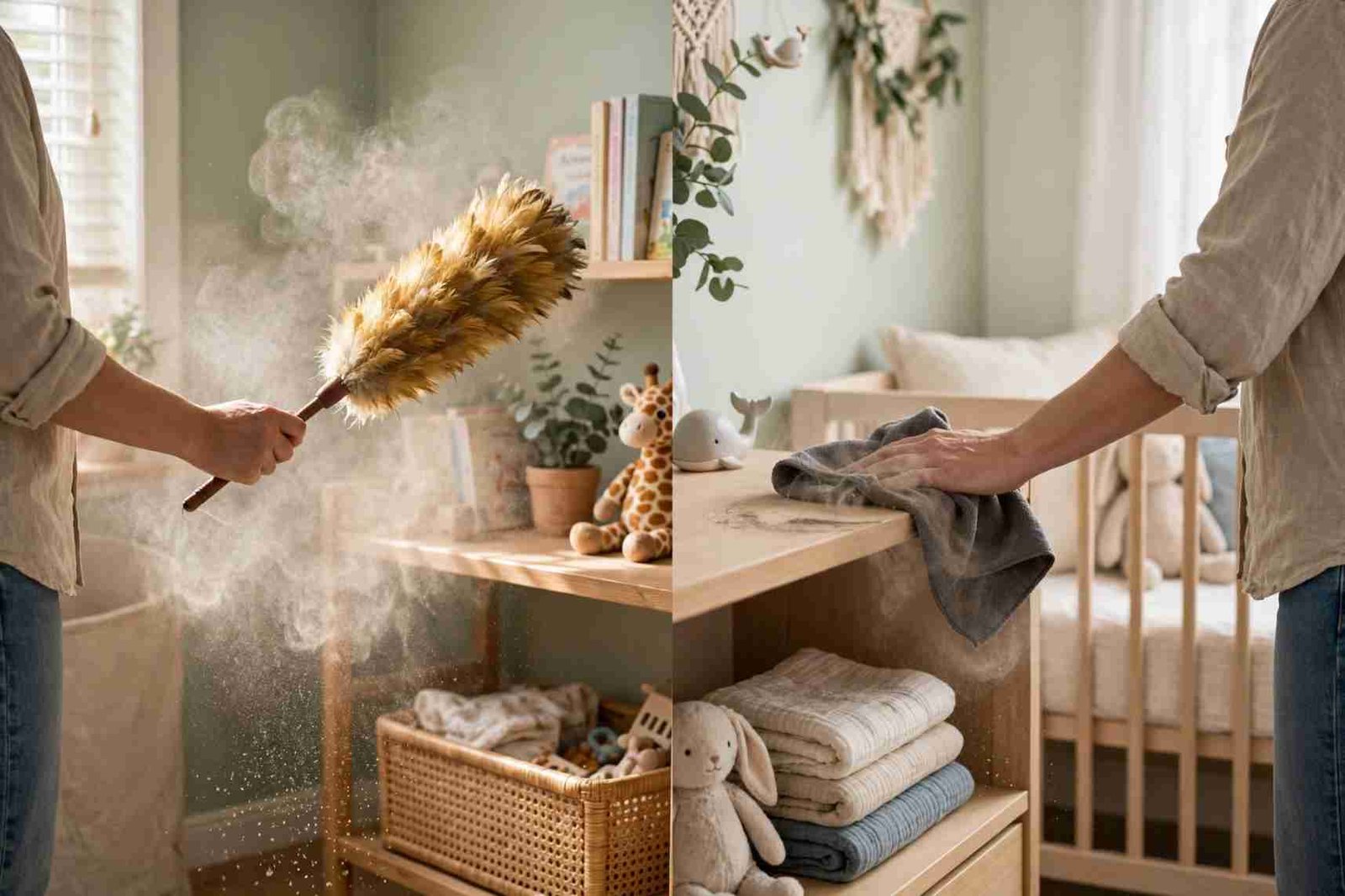
- Dry-Dusting with Feather Dusters: Feather dusters flick dust into the air, where it lingers for hours. Always use damp microfiber cloths that trap particles.
- Skipping Furnace Filter Changes: Cleaning vents is ineffective if your HVAC filter is clogged.
- Maintaining clean HVAC filters is also part of creating an efficient and comfortable indoor environment. Homeowners planning broader improvements can explore cold-climate net-zero home case studies to understand how insulation, ventilation, and energy-efficient building strategies contribute to healthier, more sustainable homes.
- Install a fresh MERV 11 to 13 filter to catch microscopic particles before they reach the nursery.
- Spraying Cleaners Directly on Trim: Squirting liquid onto baseboard seams can cause moisture to seep behind drywall, promoting mold. Always spray your cloth instead.
6. Third-Trimester Ergonomics and Knowing When to Outsource

Expectant parents in their third trimester should avoid prolonged kneeling, heavy bending, and ladder climbing to prevent pelvic strain and balance issues.
Nesting instincts often peak when physical stamina is lowest. Scrubbing baseboards and reaching for ceiling registers strains abdominal muscles and increases fall risks as your center of gravity shifts.
Include baseboard and vent prep on your nesting deep cleaning checklist early, and enlist a partner or family member for the physical labor. For many busy families, hiring an experienced deep cleaning service in Ogden to scrub baseboards, sanitize air registers, and prep the nursery is the safest choice. Professional cleaners remove physical strain while ensuring every corner meets high hygiene standards before delivery day.
Welcoming a new baby home is an unforgettable milestone. While it is easy to focus on nursery decor and baby outfits, sanitizing baseboards and vents addresses what matters most: providing your newborn with clean air, a safe environment, and a healthy start.
By capturing trapped allergens with damp microfiber tools, using non-toxic cleaners like vinegar and hydrogen peroxide, and protecting your body during late pregnancy, you create a nursery that is both spotless and safe. A clean home lets you bring your newborn through the front door with complete peace of mind, ready to focus on bonding and rest.