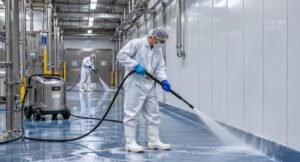
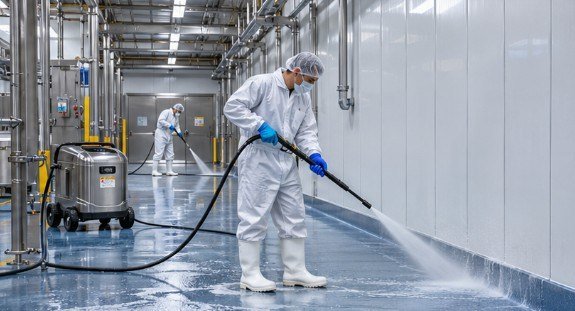
Maintaining rigorous sanitization protocols in food and beverage processing facilities requires continuous defense against biological growth and physical damage. Walls, partitions, and floor surfaces endure punishing sanitation cycles, caustic washdown chemicals, and relentless mechanical abrasion every single day.
Facility managers cannot rely on standard industrial finishes to maintain safety compliance. Choosing specialized protective barriers protects public health and structural investments over decades of intensive production.
Understanding Sanitary Compliance and Surface Failure
Food processing environments face strict government inspections, hazard analysis audits, and customer quality reviews. Unprotected drywall, exposed masonry block, and porous concrete slabs readily absorb moisture, organic food juices, and cleaning compounds.
Once liquids penetrate these substrates, internal bacterial pockets multiply rapidly, out of reach from routine sanitizing chemical mists Beyond sanitation, facility designers can explore biophilic interior architecture and daylighting simulation to improve natural illumination and employee comfort in suitable non-processing areas.
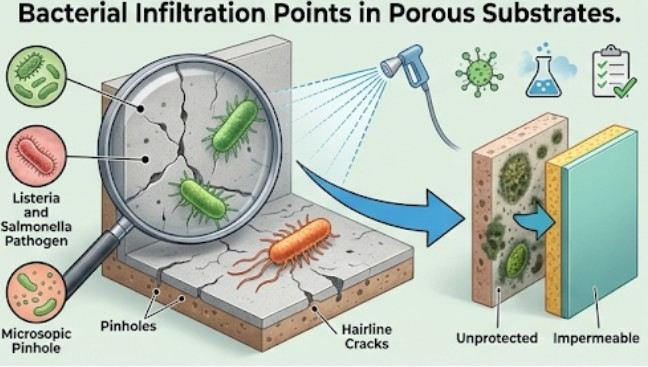
Bacterial Infiltration Points in Porous Substrates
Microscopic pinholes, hairline cracks, and hollow mortar joints shelter hazardous pathogens like listeria, salmonella, and mold spores. Standard paints and basic water-based sealers break down within weeks under pressurized chemical washing.
As moisture remains trapped inside the underlying walls or concrete slab, fungal colonies form beneath the paint film. This hidden contamination leads directly to costly audit failures, involuntary production shutdowns, and product recalls.
Thermal Shock and Chemical Attack Vulnerability
Industrial sanitation demands extreme temperatures. Boiling washdown water, low-pressure steam lances, and ice flaking systems cause rapid thermal expansion and contraction within concrete foundations. Without high-performance elastomeric resistance, rigid floor toppings crack, blister, and delaminate from structural sub-bases.
Furthermore, aggressive organic acids, animal fats, lactic acids, and concentrated alkaline cleaning solutions dissolve standard concrete matrix binders, causing deep pitting across walkways.
High-Performance Floor Defense Systems
Concrete floor protection in sanitary environments must balance chemical impermeability, tensile resilience, and physical safety. Facility planners evaluate multiple modern polymer chemistry systems to match operational demands and temperature profiles.
Urethane Slurry Mortars and Seamless Transitions
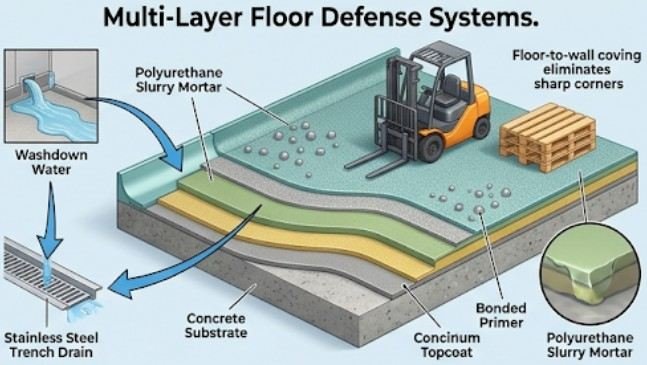
Polyurethane concrete systems provide the standard defense for severe wet-processing environments. These thick systems expand and contract at rates almost identical to concrete slabs, preventing bond failures caused by thermal shock.
Applying continuous coved bases that curve smoothly from the floor up the bottom six inches of the wall eliminates ninety-degree right angles where organic debris collects. Seamless coving enables high-velocity spray nozzles to flush grime down sloped trench drains without leaving residual build-up along perimeter walls.
Multi-Layer Polyurea and Fast-Curing Topcoats
Facilities requiring rapid maintenance turnaround often upgrade to specialized polymer chemistries that cure within hours. Specifying a polyurea coating in Utah allows cold storage facilities and meat processing plants to complete floor refurbishments without enduring days of operational downtime.
These formulations exhibit high elongation properties, maintaining flexible bridges over underlying substrate fractures while withstanding direct forklift traffic and steel-wheel cart dragging.
Hygienic Antimicrobial Wall Cladding
Ceilings and wall surfaces demand continuous protection equal to flooring installations. Airborne aerosols, boiling condensation, and high-pressure cleaning water constantly challenge wall structures.
Solid Polyvinyl and Polypropylene Sheet Systems
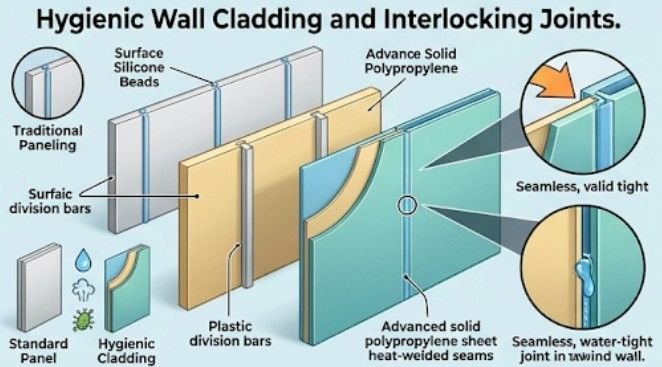
Fiberglass-reinforced plastic panels were once standard, but exposed surface resins can wear thin and expose glass fibers. Solid polyvinyl chloride and high-density polypropylene sheets provide superior sanitation performance.
These solid panels feature smooth, non-porous faces that resist staining from blood, fruit pulp, and grease. Because the material remains solid throughout its entire depth, surface scuffs from transport carts do not expose porous interior cores.
Interlocking Joints and Heat-Welded Seams
Traditional paneling systems rely on surface silicone beads and plastic division bars, which eventually degrade under chemical exposure. Advanced hygienic cladding uses thermo-welded joint rods or tongue-and-groove locking seams bonded with structural adhesives.
Heat-welding eliminates open seams, creating a continuous, impervious vertical envelope around the room. Water cannot penetrate behind wall sheets, preventing interior rot inside structural wall cavities.
Sanitization, Cleaning Protocols, and Long-Term Value
Protective surfaces must endure continuous contact with harsh sanitation chemicals without losing their physical integrity or slip resistance. Facilities can also incorporate water conservation strategies in sustainable building design to reduce unnecessary washdown water consumption without compromising required sanitation standards.
Slip Resistance and Employee Safety Balance
Greasy liquids and wet processing create slip hazards for plant workers. Floors must incorporate aluminum oxide or silica quartz broadcast aggregate to ensure firm footing under wet conditions. Facility engineers must carefully calibrate the aggregate texture.
Excessively coarse surfaces trap food debris and tear cleaning mop fibers, while overly smooth floors compromise worker footing. Proper encapsulation locks the aggregate into the resin base while leaving smooth contours that clean quickly during sanitation shifts.
Resistance to Caustic Washdowns and Steam
Sanitizing chemicals rely on alternating applications of sodium hydroxide foams and nitric acid solutions to dissolve animal fats and mineral scale. Wall and floor protection systems must demonstrate zero chemical degradation when exposed to these solutions.
Premium hygienic systems maintain structural bonds during daily chemical washing, safeguarding brand reputations and meeting regulatory safety mandates year after year.