I once assumed that complex architectural forms began as ambitious sketches and depended on fabricators to determine how they could actually be built. Today, I see a far more coordinated process. Parametric design and digital fabrication connect design rules, performance data, material behavior, and machine production within one adaptable workflow.
Instead of drawing every component individually, designers establish relationships between dimensions, materials, environmental conditions, and construction requirements. When one value changes, the connected model responds. This makes it possible to explore numerous alternatives while maintaining control over accuracy, cost, performance, and constructability.
What Is Parametric Design?
Parametric design is a rule-based approach in which geometry is controlled by adjustable variables. These variables might include a building’s height, the distance between structural members, facade opening sizes, shading angles, or the amount of daylight entering an interior.
The resulting model is not a fixed digital drawing. It is a responsive system capable of changing when its inputs are modified.
For example, a designer can create a facade in which each panel changes according to solar exposure. Increasing the desired shade level can automatically deepen selected panels without requiring the entire facade to be redrawn.
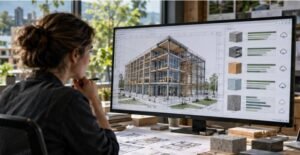
Tools such as Rhino and Grasshopper, Revit and Dynamo, and specialized analysis platforms allow architects to develop these relationships visually. Coding can extend their capabilities, but many workflows can be created through visual programming interfaces.
What Is Digital Fabrication?
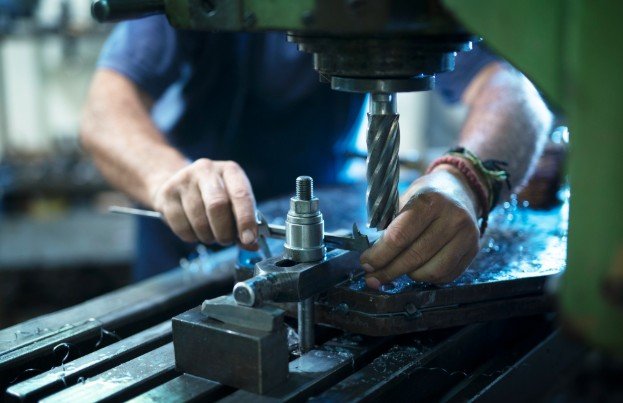
Digital fabrication is the process of producing physical components directly from digital information. Computer-controlled machines interpret fabrication files and cut, mill, print, drill, bend, or assemble materials with high precision.
CNC Machining
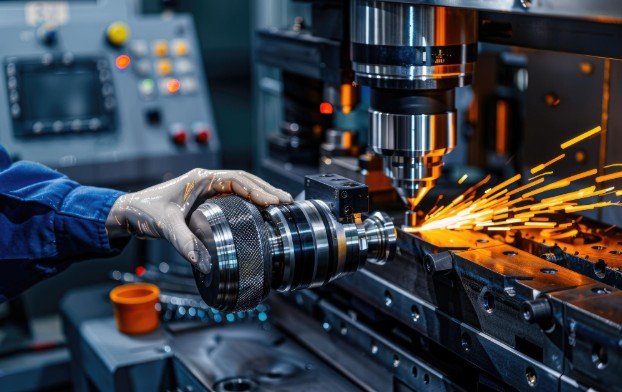
Computer numerical control machines remove material from sheets, panels, or solid blocks. They are frequently used for timber components, molds, facade panels, furniture, and full-scale architectural prototypes.
Laser Cutting
Laser cutters create detailed profiles from thin sheets of metal, wood, acrylic, cardboard, and other materials. They are particularly useful for scale models, screens, connection plates, and folded assemblies.
Additive Manufacturing
Three-dimensional printers build objects layer by layer. Small printers are widely used for prototypes, while larger systems can work with concrete, clay, polymers, and composite materials.
Robotic Fabrication
Industrial robots can follow complex toolpaths to cut, place, extrude, carve, or join materials. Their range of motion makes them suitable for operations that are difficult to complete with conventional machines.
How the Design-to-Fabrication Workflow Works
A successful process begins with a clearly defined design brief. The team identifies performance targets, spatial requirements, available materials, budget limits, and manufacturing capabilities before creating the parametric system.
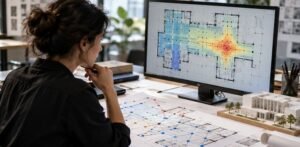
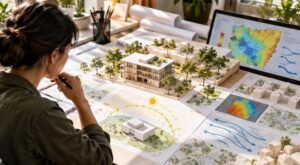
The model can then be connected to environmental, structural, or cost-analysis tools. Designers may test daylight levels, solar heat gain, structural loads, material quantities, panel dimensions, and assembly sequences.
Promising options must be rationalized into parts that machines can manufacture and workers can assemble. This is where many visually impressive concepts fail. A machine has a limited working area, a cutting tool has a particular diameter, and sheet materials are supplied in standard sizes.
Fabrication constraints should therefore influence the model from the beginning rather than being addressed after the form has been finalized.
Once the geometry is resolved, information is exported through formats such as DXF, STL format, STEP, or machine-specific toolpaths. Parts can also be numbered, nested onto material sheets, and organized according to their assembly sequence.
Prototypes are then created to test tolerances, connections, structural performance, surface quality, and installation methods. Test results return to the digital model, creating a continuous feedback loop between designing and making.
Why Combining the Technologies Matters
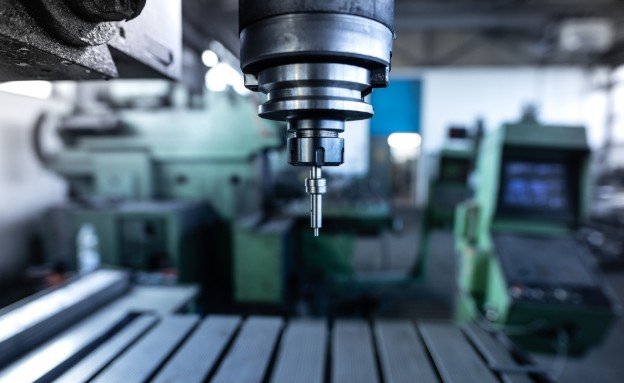
The main value of parametric design and digital fabrication is the direct connection they establish between information and production. A single parameter change can update hundreds of related components, dimensions, labels, and fabrication files.
This capability makes mass customization practical. A building facade might contain hundreds of unique panels, yet every panel can be generated from the same underlying system. Individual parts can respond to sunlight, views, ventilation, acoustics, or structural forces while retaining a consistent architectural identity.
The workflow may also reduce material waste. Nesting software can arrange components efficiently on standard sheets, while structural optimization can remove unnecessary material. Physical prototypes help teams identify errors before committing to complete production.
These benefits are not automatic. Poorly planned fabrication can still consume excessive energy, create unusable prototypes, or generate difficult-to-recycle waste. Sustainability depends on responsible material selection, efficient machine use, durable construction, and designs that can be repaired or disassembled.
Architectural Applications
Facade systems are among the most recognizable applications. Parametric models can control panel sizes, perforation patterns, shading depths, and attachment points according to environmental conditions.
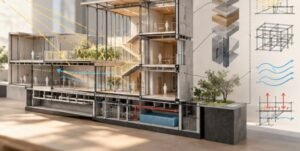
Complex structural systems also benefit from rule-based modeling. Gridshells, curved timber structures, space frames, and lightweight pavilions often contain many related but nonidentical components. The model can generate the geometry and production information required for every part.
Interior installations, acoustic surfaces, furniture, molds, modular structures, and customized building components are equally suitable. At a larger scale, robotic systems and additive manufacturing are expanding possibilities for concrete, clay, timber, and composite construction.
Challenges Designers Must Consider
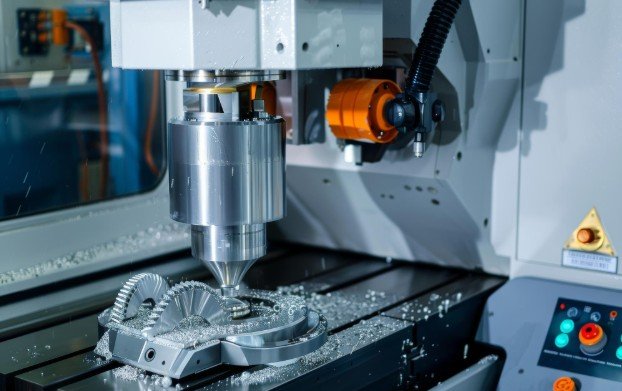
The learning curve can be demanding. Designers need more than software knowledge. They must understand geometry, material behavior, tolerances, joints, machine capabilities, and assembly processes.
Interoperability is another challenge. Information may be lost when models move between design, simulation, documentation, and manufacturing platforms. Consistent naming, version control, file standards, and clearly assigned responsibilities are essential.
Cost must also be evaluated realistically. Software subscriptions, machinery, training, maintenance, specialist labor, and prototyping require investment. Digital fabrication creates the greatest value when a project involves repetition, variation, complex geometry, or measurable performance goals.
Frequently Asked Questions
1. How do parametric design and digital fabrication work together?
Parametric design and digital fabrication connect an adaptable digital model with computer-controlled production. When a parameter changes, related geometry and manufacturing information can update before production begins.
2. Is parametric design the same as generative design?
No. Parametric design controls geometry through defined variables and relationships. Generative design produces and evaluates multiple solutions against selected objectives. Both approaches can be combined.
3. Do architects need coding skills?
Coding is not always required because visual programming tools allow users to connect logical components. However, basic coding can help with automation, custom functions, data processing, and advanced workflows.
4. Can small design studios use these technologies?
Yes. Smaller studios can use desktop machines, shared workshops, outsourced fabrication services, or university facilities. Beginning with models and limited prototypes is often more practical than purchasing industrial equipment.
The Future of Computational Making
I believe the real value of this field goes beyond producing unusual or visually complex forms. It allows architects to connect intention, evidence, material constraints, and construction information within one evolving system.
The strongest projects will involve fabricators early, test physical prototypes, and treat manufacturing limitations as design inputs. They will not use technology simply to create spectacle. They will use it to improve precision, conserve resources, evaluate alternatives, and produce components that can be assembled with confidence.
For me, that shift represents the future of meaningful digital practice: not separating design from construction, but allowing each one to continuously inform the other.