

Keeping an outdoor area orderly demands steady attention throughout every turn of the calendar. A residential yard faces blistering summer heat, relentless autumn leaves, freezing winter snowpack, and intense spring runoff. Without structured care, turf grass becomes patchy, invasive flora takes root, and expensive irrigation equipment risks severe freeze damage. A predictable routine protects structural investments and safeguards natural vegetation.
Spring Awakening and Yard Renewal
Spring signals rapid new growth across the mountain west and surrounding valleys. As the frost line recedes, properties require thorough preparation to jumpstart turf health and shake off winter dormancy.
Debris Clearing and Ground Assessment
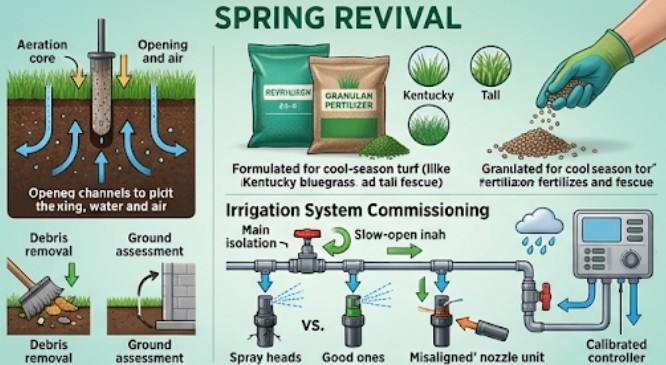
Begin by clearing fallen branches, matted leaves, and gravel cast onto the turf by snow shovels. Raking up dense mats of dead organic matter prevents mold colonies from suffocating emerging shoots. Inspect ground grading around foundations to confirm melting snow drains away from masonry walls instead of pooling near basement footings.
Soil Aeration and First Feedings
Compacted earth prevents water, oxygen, and liquid nutrients from reaching deep root zones. Running a core aerator pulls plugs of dirt, opening channels that loosen dense clay layers. Following core extraction, spread a balanced, slow-release granular fertilizer formulated for cool-season turf varieties like Kentucky bluegrass and tall fescue. Light overseeding during early spring fills in thinning spots before persistent crabgrass germinates.
Irrigation System Commissioning
Never activate culinary or secondary water lines before the final hard freeze passes. Close all drain valves, then slowly open the main stop-and-waste valve to avert high-pressure water hammer. Walk every station individually to check for cracked spray heads, misaligned nozzles, and weeping manifold pipes. Calibrate the master controller according to early spring rainfall amounts rather than setting long daily watering cycles.
Summer Lawn Care and Water Conservation
Summer brings intense sunshine, high ultraviolet indexes, and parched air that tests vegetation resilience. Outdoor management must pivot from rapid growth stimulation to moisture retention and thermal stress defense.
Precision Mowing Protocols
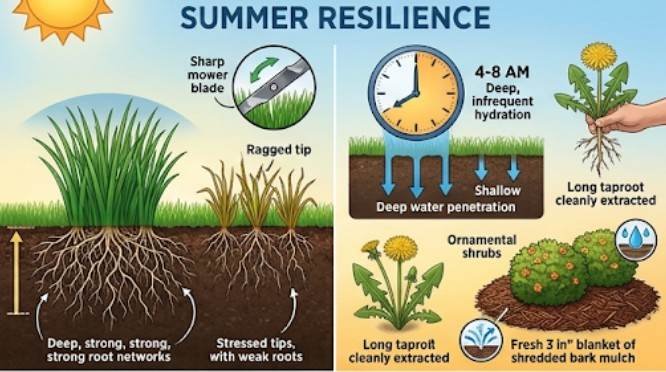
Cutting grass too short remains a major error during dry periods. Set mower blades at three to four inches in height. Taller blades cast protective shade across topsoil, decreasing evaporation rates while prompting roots to seek moisture deeper underground. Sharpen mower blades after every twenty hours of runtime; ragged grass tips turn white, lose water rapidly, and invite leaf spot infections.
Deep, Infrequent Hydration
Frequent shallow sprinkling breeds weak root networks that fail under heat waves. Water lawns between four and eight o’clock in the morning to minimize evaporative losses caused by midday winds and high sun angles. Saturate ground zones deeply two or three times weekly, permitting the top inch of soil to dry out somewhat between applications to deter fungal growth.
Weed Control and Mulch Replenishment
Invasive weeds compete aggressively with shrubs and perennials for scarce ground hydration. Hand-pull taproot weeds such as dandelions after watering when the dirt releases roots cleanly. Around ornamental shrubs and bedding plants, apply a fresh three-inch blanket of shredded bark mulch.
Mulch insulates roots, stops weed germination, and cuts bed evaporation by more than half. Sustainable landscaping also benefits from understanding how to select materials using environmental product declarations when choosing paving, edging, and other outdoor construction materials.
Autumn Preparation for Winter Survival
Cooler daytime temperatures provide an optimal window to repair summer wear and fortify garden beds against severe cold. Tasks tackled during autumn yield profound dividends the following spring.
Aeration, Overseeding, and Winterizer Applications
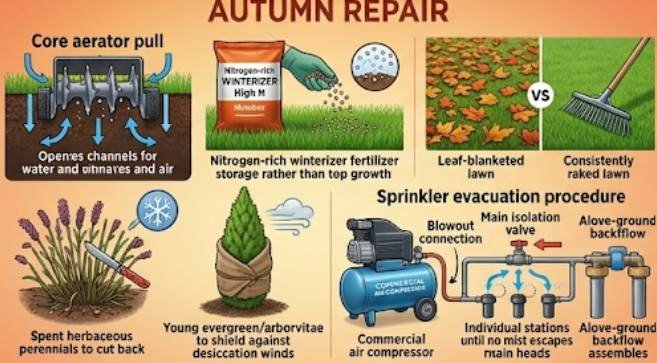
Early autumn serves as the prime season for turf revitalization. Cooler ambient air combined with warm soil generates rapid seed germination. Aerate again if the yard saw heavy foot traffic throughout the summer. Apply a nitrogen-rich winterizer fertilizer; this feeding encourages vascular energy storage inside root cells rather than forcing rapid leaf blade expansion.
Perennial Maintenance and Shrub Protection
Cut back spent herbaceous perennials after killing frosts turn stalks brittle. Rake leaves off lawns consistently; decomposing leaf blankets smother green foliage and invite snow mold during winter dormancy. Wrap vulnerable arborvitae and young evergreen shrubs with breathable burlap barriers to shield foliage from harsh winter desiccation winds.
Sprinkler Evacuation Procedures
Unpurged underground irrigation pipes will freeze, crack, and rupture beneath freezing ground. Shut down water feeds at the main isolation valve. Connect a high-volume commercial air compressor to the blowout connection, cycling through each station until mist disappears and only clean air escapes the heads.
Insulate above-ground backflow assemblies with weather-resistant insulated covers. When tackling extensive yard overhauls or tricky drainage repairs, homeowners often rely on a custom landscape company in Utah to optimize structural grading and ensure long-term durability.
Winter Property Care and Equipment Maintenance
Winter restricts exterior yard work, but steady vigilance protects outdoor assets against cold-weather hazards.
Smart Snow Management
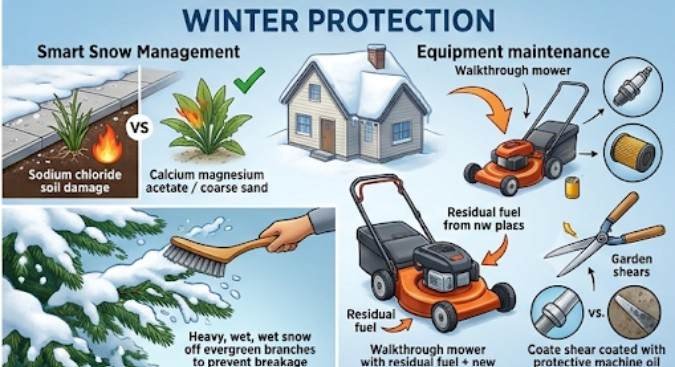
Avoid tossing heavy, salt-laden snow directly onto fragile shrubbery or turf edges. Deicing salts draw moisture out of plant roots, producing burn scars along walkways come springtime. Choose calcium magnesium acetate or coarse sand over sodium chloride along patio borders to protect adjacent soils.
Winter Inspection and Tool Overhaul
Brush heavy, wet snow off evergreen limbs following substantial winter storms to avert branch breakage. Use quiet winter weekends to overhaul mechanical equipment. Drain residual fuel from walk-behind mowers, replace spark plugs, install clean air filters, and coat metal garden shears with protective machine oil.